Agentic AI Today and Tomorrow: An Interview with Steven Bathiche, Microsoft Technical Fellow and Vice President
5 August 2026
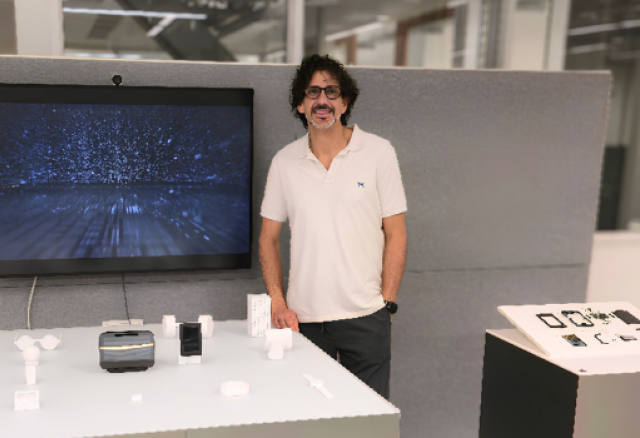
Ivan Tashev, Editor-in-Chief of the IEEE SPS Industry Signals newsletter, interviews Microsoft’s Steven Bathiche to explore how agentic AI can move from answering questions to taking action—and reshape the future of computing.
From Autonomous Agents to Industry Impact: IEEE ICA 2026 Advances Deployable Agentic AI
5 August 2026

From LLM agents to multi-agent systems, IEEE ICA 2026 unites global experts in Japan to advance trustworthy, deployable Agentic AI.
Call for Project Proposals: Signal Processing Mentorship Academy (SigMA) Program
1 August 2026

Connect with a mentor in the Signal Processing Mentorship Academy.
Call for Papers Deadline Extended! IEEE J-STSP Signal Processing for Trustworthiness in 6G Wireless Ecosystems
1 August 2026

The deadline for submissions to this special edition on Signal Processing for Trustworthiness in 6G wireless Ecosystems has been extended to 15 August 2026.
Call for Nominations: Awards Board, Industry Board, and the Nominations & Elections Committee
1 August 2026

Nominations are open for the Awards Board, Industry Board, and Nominations and Elections Committee.
Call for Nominations: Technical Committee Vice Chair and Member Positions
1 August 2026
The Nominations and Appointments Subcommittee of each Technical Committee is currently accepting nominations for new Members, and, where applicable, the Vice Chair position. Nominations should be submitted directly to the respective Technical Committee’s Nominations and Appointments Subcommittee by 15 September 2026.
Call for Mentors: IEEE SPS SigMA Program
1 August 2026

The SigMA program pairs young researchers with established experts to collaborate on a 9-month research project of mutual interest.
Nominate a Chapter for the 2026 Chapter of the Year!
1 August 2026
The award will be granted to a Chapter that has provided their membership with the highest quality of programs, activities and services.
2026 IEEE Signal Processing Society Award Nominations Now Open!
1 August 2026
SPS honors its members’ contributions and accomplishments in the various signal processing disciplines and Society activities through its robust…
Read moreCall for Short Course Proposals: 2026 Educational Series
1 August 2026

The Educational Board invites proposals for short, hands-on courses (~3 hours) tailored for industry professionals. Selected courses will be featured in our 2026 professional development series and made available at IEEE Learning Network.
IEEE Signal Processing Society on 
@ieeeSPS
13.5K+ subscribers‧250+ videos
ICASSP 2026 Video Recap
Episode 12: The Face That Isn’t One Person: Morphing Attacks and the Future of Face Recognition
SPS Scholarships Open Up the Signal Processing World