The following is a list of Signal Processing Society's distinguished industry speakers.
2027 Distinguished Industry Speakers
Yuki Mitsufuji
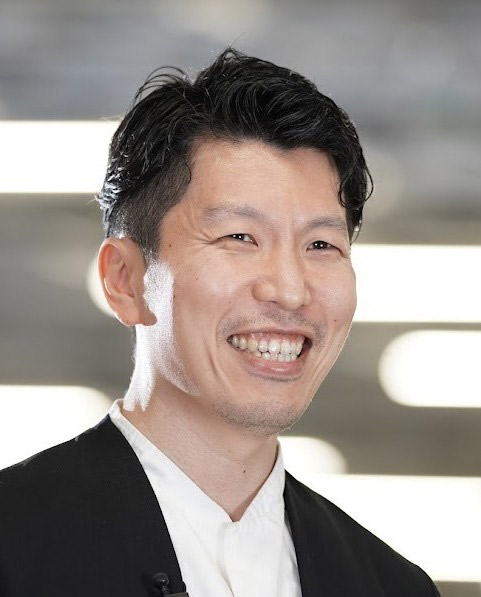 Yuki Mitsufuji (SM) has been Vice President, AI Research at Sony Corporate Technology Center America Inc. (since 2024); Distinguished Engineer at Sony Group Corporation (since 2020); Visiting Research Professor at New York University (since 2025); Specially Appointed Associate Professor at Tokyo Institute of Technology (2022 to 2025). He received his bachelor’s degree from the Department of Information and Computer Science, Faculty of Science and Technology, Keio University (1998 to 2002); his master’s degree from the Graduate Major in Science for Open and Environmental Systems, Graduate School of Science and Technology, Keio University (2002 to 2004); and the Doctor of Philosophy degree in Information Science and Technology from the Graduate School of Information Science and Technology, the University of Tokyo (2014 to 2020).
Dr. Mitsufuji joined Sony Corporation in 2004, and from 2011 to 2012 he was an Invited Researcher at the Institut de Recherche et Coordination Acoustique/Musique (IRCAM) in Paris, France. Since March 2022, he has led the Creative AI Lab at Sony, which has since evolved into the Ethical Creative & Protective AI Lab. More recently, Dr. Mitsufuji has been leading research on generative AI for audio.
Dr. Mitsufuji served as Member, IEEE Signal Processing Society Audio and Acoustic Signal Processing Technical Committee (2023 to 2026); Associate Editor, IEEE Open Journal of Signal Processing (since 2024); Program Committee Chair, IEEE International Conference on Consumer Electronics (Japan) (2021 to 2023); Competition Chair, International Joint Conference on Neural Networks (2025); Session Chair, IEEE International Conference on Acoustics, Speech and Signal Processing (2020, 2022, 2023, and 2024). He has also served as Area Chair, Conference on Neural Information Processing Systems, the International Conference on Learning Representations, the International Conference on Machine Learning, the Annual Meeting of the Association for Computational Linguistics, and the IEEE International Conference on Acoustics, Speech and Signal Processing. He organized the Music Demixing Challenge (2021), the Sound Demixing Challenge (2023), Task 3 of the IEEE Audio and Acoustic Signal Processing Challenge on Detection and Classification of Acoustic Scenes and Events (2022–2026), and the Music Source Restoration Challenge at the IEEE International Conference on Acoustics, Speech and Signal Processing (2026).
Dr. Mitsufuji received the Yamazaki-Teiichi Prize from the Foundation for Promotion of Material Science and Technology of Japan (2026), a S+T+ARTS Prize nomination at Ars Electronica (2026), the AI Creative Future Award (2025), the Yagami Award from Keio University (2025), the Best Industrial Paper Award at the International Joint Conference on Neural Networks (2025), the Best Show & Tell Award at the International Conference on Digital Audio Effects (2024), the Outstanding Paper Award at the Annual Meeting of the Association for Computational Linguistics (2023), the Local Commendation for Invention Award from the Japan Institute of Invention and Innovation (2022), and a Jury Selection at the Japan Media Arts Festival (2019). He was named to the single-year list of the Stanford/Elsevier World’s Top 2% Scientists (2025 and 2026). His teams ranked first in Task 3 of the IEEE Audio and Acoustic Signal Processing Challenge on Detection and Classification of Acoustic Scenes and Events in 2021 and third in 2020, and first in the music task of the Signal Separation Evaluation Campaign (2015, 2016, and 2018).
Yuki Mitsufuji, Ph.D.
Vice President of AI Research, Sony Corporate Technology Center America Inc.
Distinguished Engineer, Sony Group Corporation
25 Madison Ave. New York, NY 10010, USA
P: 9178650379
Lecture Topics
- Separation and Generation of Creative Media: From Signal Processing Foundations to Industrial Deployment
- Generative AI for Audio: Diffusion Models and Real-World Applications
Tara Sainath
 Tara Sainath (F) holds a Bachelor of Science (S.B.) (2000-2004), a Master of Engineering (M.Eng.) (2004-2005), and a Doctor of Philosophy (Ph.D.) (2005-2009) in Electrical Engineering and Computer Science from the Massachusetts Institute of Technology. Her expertise in speech recognition and deep neural networks led to a five-year stint at the IBM Thomas J. Watson Research Center and currently fuels her work as a Distinguished Research Scientist and Lead of Gemini Audio in Google DeepMind’s Audio Pillar.
Dr. Sainath was elevated to IEEE Fellow (2021) and International Speech Communication Association Fellow (2022). Her honors include the IEEE Signal Processing Society Industrial Innovation Award (2021); the IEEE Signal Processing Society Signal Processing Magazine Best Paper Award (2022); the IEEE Signal Processing Society Best Paper Award (2024); the National Academy of Artificial Intelligence Distinguished AI Scholar Award (2025), the same year she was elected as a National Academy of Artificial Intelligence Member.
Dr. Sainath served as Member, IEEE Speech and Language Processing Technical Committee (2015 to 2021); Associate Editor, IEEE/Association for Computing Machinery Transactions on Audio, Speech, and Language Processing (2016 to 2020); Program Chair, International Conference on Learning Representations (2017 and 2018); and her extensive work co-organizing influential conferences and workshops, including the International Conference on Speech Communication and Technology (Interspeech) (2010, 2016, and 2019), the International Conference on Machine Learning (2013 and 2017), and the Neural Information Processing Systems conference (2020).
Dr. Sainath’s primary research interests continue to be in deep neural networks for speech and audio processing.
Tara Sainath
P: +1 617-721-5274
Lecture Topics
- Audio Processing with Large Language Models
- On-Device Audio Processing
- Deep Neural Networks for Audio Processing
Guan-Ming Su
 Guan-Ming Su (SM) received the Ph.D. degree from the University of Maryland, College Park in 2006. He is currently the Director of Research with the Dolby Laboratories, Sunnyvale, CA, USA.
Dr. Su is the inventor of more than 240 U.S./international patents and pending applications. He is one of the recipients of 2020 (72nd) Technology and Engineering Emmy Award and 2021 (73rd) Engineering Emmy Award Philo T. Farnsworth Award for the contribution to high dynamic range (HDR) and wide color gamut (WCG) video as Dolby Vision format. He received 2025 University of Maryland Department of Electrical and Computer Engineering Distinguished Alumni Award and 2025 Asia-Pacific Signal and Information Processing Association (APSIPA) Industrial Distinguished Leader Award. His co-authored paper won the best industry paper award in IEEE International Conference on Image Processing (ICIP) 2025 and best paper award in IEEE ICIP 2026 3DVPC workshop. He also contributed several fundamental coding tools to international video coding standards, including Luma Mapping with Chroma Scaling (LMCS) in Versatile Video Coding (VVC), Multi-Plane Imaging (MPI) in MPEG Immersive Video (MIV) Simple MPI Profile, and Generative Face Video coding (GFVC) in Supplemental Enhancement Information (SEI), and Triplane Video based Gaussian Splatting (TV-GS) in current MPEG VSEI TuC.
Dr. Su served as the Technical Program Co-Chair, International Conference on Computing, Networking & Communications (ICNC) (2013 and 2014); General Co-Chair, ICNC (2015); Technical Program Co-Chair, International Conference on Multimedia and Expo (ICME) (2021); Industry Innovation Forum Chair, IEEE International Conference on Image Processing (ICIP) (2023 and 2025); General Co-Chair, Multimedia Information Processing and Retrieval (MIPR) (2024, 2025, and 2027). He served as a Vice President for industrial relations and development in APSIPA (2018 to 2019); Vice Chair, Conference in IEEE Technical Committee on Multimedia Computing (TCMC), (since 2021); Associate Editor, for APSIPA Transactions on Signal and Information Processing, IEEE MultiMedia Magazine, and now IEEE Transactions on Circuits and Systems for Video Technology (TCSVT).
Lecture Topics
- End-to-End Volumetric Video Ecosystem Using Spatial-Temporal Gaussian Splatting
- Video Restoration and Enhancement In The Wild
- High-Dynamic Range Visual Pipeline
Dong Tian
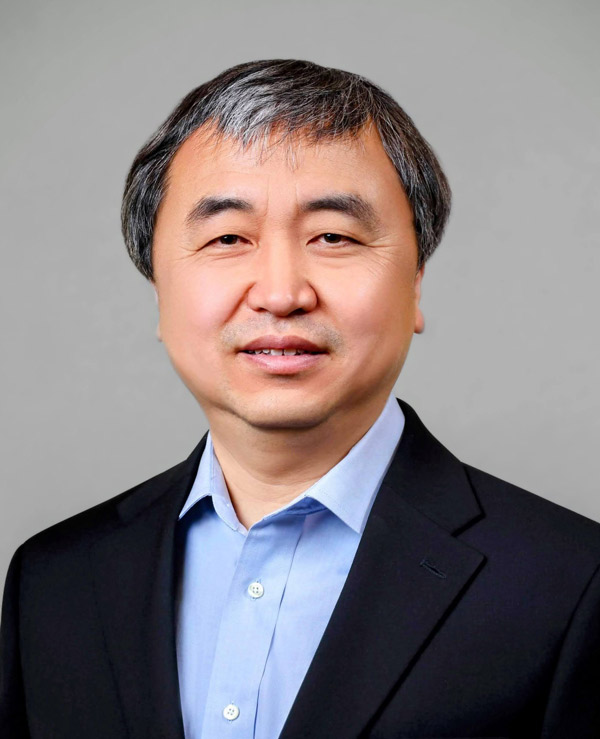 Dong Tian (F) is Senior Director and Senior Principal Engineer at InterDigital, Boxborough, MA, USA, leading advanced R&D initiatives in neural media compression, learned point cloud coding, and 3D video representations. He earned his B.S. and M.S. degrees in Automation from the University of Science and Technology of China (USTC) in 1995 and 1998, respectively, and his Ph.D. in Electrical Engineering from Beijing University of Technology in 2001. Prior to joining InterDigital in 2018, Dr. Tian served as Senior Principal Research Scientist at Mitsubishi Electric Research Labs (MERL) in Cambridge, MA (2010–2018), Senior Research Engineer at Thomson Corporate Research in Princeton, NJ (2006–2010), and Visiting Researcher at Tampere University of Technology, Finland (2002–2005).
Dr. Tian is an IEEE Fellow. His fundamental research on view synthesis, frame packing, depth coding, and neural representations has been broadly integrated into international standards—including H.264/AVC, Multiview Video Coding (MVC), and 3D-HEVC—underpinning consumer 3D packaging, broadcast transmission, and spatial computing devices. In 2024, his team engineered the 1st place winning entry in the international MPEG AI-PCC Call for Proposals.
Dr. Tian’s research focuses on the intersection of deep learning, signal processing, and visual computing. His work has established foundational paradigms for 3D point cloud representation learning, geometric topology processing, and deep learning-based visual data compression. He authored the geometric distortion evaluation metric that became the standard benchmark across ISO/IEC MPEG for point cloud compression evaluation.
Dong Tian
574 Burroughs Road
Boxborough, MA 01719, USA
P: +1-609-785-1102
Lecture Topics
- AI for Media Compression: Neural Codecs and Rate-Distortion Innovations
- 3D Data Learning: Point Clouds, Geometric Topologies, and Neural Representations
- Neural Compression in Practice: From Cutting-Edge R&D to MPEG Standardization
- Bridging Research and Industry: From Fundamental Signal Processing to Global Standards and Products
2026 Distinguished Industry Speakers
Pin-Yu Chen
 Pin-Yu Chen (F) is a principal research scientist at IBM Thomas J. Watson Research Center, Yorktown Heights, New York, USA. He is also the chief scientist of RPI-IBM AI Research Collaboration and PI of ongoing MIT-IBM Watson AI Lab projects. Dr. Chen received his Ph.D. in electrical engineering and computer science from the University of Michigan, Ann Arbor, USA, in 2016.
Dr. Chen received the International Joint Conferences on Artificial Intelligence (IJCAI) Computers and Thought Award in 2023. At IBM Research, he received several research accomplishment awards, including IBM Master Inventor, IBM Corporate Technical Award, and IBM Pat Goldberg Memorial Best Paper.
Dr Chen is an IEEE Fellow; Editorial Board Member, Transactions on Machine Learning Research (since 2022); Member, IEEE Transactions on Signal Processing (since 2024). He is also Area Chair or Senior Program Committee Member for many conferences, and a Distinguished Lecturer of ACM. He received the IEEE Global Communications Conference (GLOBECOM) 2010 GOLD Best Paper Award and the Annual Conference on Uncertainty in Artificial Intelligence (UAI); Best Paper Runner-Up Award (2022); and the IEEE Signal Processing Society Industry Young Professional Leadership Award (2025).
Dr. Chen’s recent research focuses on AI safety and robustness. His long-term research vision is to build trustworthy machine learning systems. His research contributes to IBM open-source libraries including Adversarial Robustness Toolbox (ART 360), AI Explainability 360 (AIX 360), and In-context Explainability 360 (ICX 360).
Lecture Topics
- Computational Safety for Generative AI
Jianquan Liu
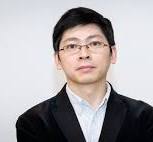 Jianquan Liu (SM) is currently a Director and Senior Principal Researcher at the Visual Intelligence Research Laboratories of NEC Corporation, working on the topics of multimedia data processing. He is also a Visiting Professor at Nagoya University and an Adjunct Professor at Hosei University, Japan. Prior to NEC, he worked as a development engineer at Tencent Inc. from 2005 to 2006 and was a visiting researcher at the Chinese University of Hong Kong in 2010. Dr. Liu received the M.E. and Ph.D. degrees from the University of Tsukuba, Japan.
Dr. Liu received the DBSJ Young Researcher’s Achievement and Contribution Award (2024), the IEICE Achievement Award 2023), the Niwa & Takayanagi Achievement Award (ITE) (2023), the 69th Electrical Science and Engineering Promotion Award, and the Minister of Education, Culture, Sports, Science and Technology (MEXT) Award (2021), the KANTO Invention and Innovation Award (JIII) (2021), the IPSJ Research and Engineering Award (2020), and the IPSJ Industrial Achievement Award (2018).
Dr. Liu is/was serving as Member-at-Large of IEEE SPS Industry Board (2025-2026); Industry Co-Chair, IEEE International Conference on Image Processing (ICIP) 2023, 2025 and ACM MM 2023, 2024, 2025; the General Co-chair of IEEE MIPR 2021; the PC Co-chair of IEEE IRI 2022, ICME 2020, AIVR 2019, BigMM 2019, ISM 2018, ICSC 2018, ISM 2017, ICSC 2017, IRC 2017, and BigMM 2016; the Workshop Co-chair of IEEE AKIE 2018 and ICSC 2016; the Demo Co-chair of IEEE MIPR 2019 and MIPR 2018. He is a senior member of IEEE, ACM and IPSJ, and a member of IEICE, APSIPA and DBSJ, a member of expert committee for IEICE Mathematical Systems Science and its Applications (2017-), and IEICE Data Engineering (2015-2021), and Associate Editor, IEEE Transactions on Multimedia (2021-2024), ACM TOMM (2022-), EURASIP JIVP (2023-), IEEE MultiMedia Magazine (2019-2022), ITE Transaction on Media Technology and Applications (2021-), APSIPA Transactions on Signal and Information Processing (2022-), and the Journal of Information Processing (2017-2021).
Lecture Topics
- Multimedia Data Processing
- Multimodal Generative AI
- Human Behavior Sensing and Understanding
- Multimedia and Computer Vision Related Topics Including Video Retrieval, Video Summarization, Action Recognition, Object Tracking, Human and Object Interaction, Scene Recognition, Behavioral Pattern Analysis, Etc.
- Database and Data Mining Related Topics Including Multimedia Database, High-Dimensional Similarity Search, Web Data Mining, Information Retrieval, Cloud Computing, Social Network Analysis, Etc.
Scott McCloskey
 Scott McCloskey (SM) received his Ph.D. in Computer Science from McGill University in 2008, his M.S. in computer science from the Rochester Institute of Technology in 2002, and his B.S. in computer science and mathematics from the University of Wisconsin – Madison in 1998. Between his undergraduate and Ph.D., he completed the Image Science Career Development program at the Eastman Kodak research labs.
Dr. McCloskey is the Director of Computational Imaging at Kitware, where he leads a group of researchers and developers within the Computer Vision team to develop new capabilities involving non-traditional sensing. Prior to joining Kitware, he was a technical fellow at Honeywell, where he served as the principal investigator (PI) on a number of commercial and contract-funded projects in computer vision and computational imaging. His commercial work addressed problems in visual surveillance, biometrics, barcode scanning, and visual metrology.
Dr. McCloskey has served as General Chair, Program Chair, and Area Chair for the IEEE Winter Conference on the Applications of Computer Vision (WACV); as the Industrial Relations Chair, Corporate Relations Chair, and Area Chair for the premier computer vision conferences including the IEEE Conference on Computer Vision and Pattern Recognition (CVPR) and International Conference on Computer Vision (ICCV). He has served on a National Science Foundation review panel and as Associate Editor of the Pattern Recognition journal.
Dr. McCloskey was a Member of the Information Forensics and Security Technical Committee (2021-2023). He received the Best Paper Award for “Centroiding Point-Objects with Event Cameras” (2025), Best Paper Award for “High-resolution Image Enumeration for Low-resolution Face Recognition" (2024), and the Outstanding Reviewer Award (2024 and 2012).
Lecture Topics
- Event-Based Sensing for Space-Based Applications
- Using Computational Cameras to Recognize Moving Objects
- Self-Supervised X-Ray Computed Tomography from Photon-Starved Images
- Media Forensics in the Era of Deepfakes
Beibei Wang
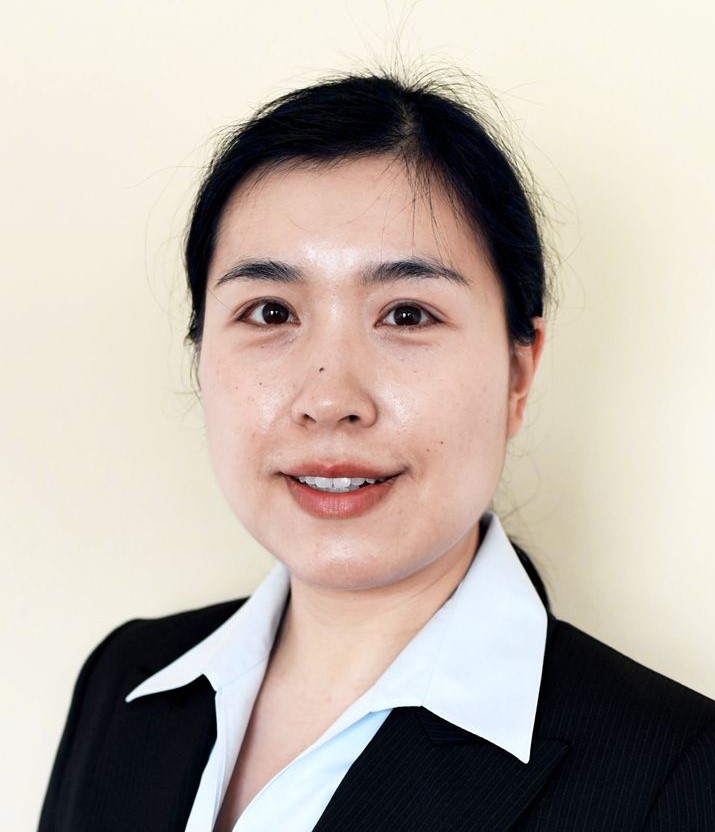
Beibei Wang (F) earned her B.S. in electrical engineering from the University of Science and Technology of China (1999-2004, highest honors), followed by M.S. and Ph.D. degrees from the University of Maryland, College Park (2008, 2009). After a postdoctoral fellowship at Maryland, she held R&D roles at Qualcomm (2010–2014), contributing to 3GPP wireless standards. Since 2015, she has served as Vice President of Research at Origin Wireless, leading innovations in wireless sensing.
Dr. Wang has been a Distinguished Lecturer for the IEEE Communications Society (2022–2023) and IEEE Sensors Council (2025–2027). She has served on the editorial board of IEEE Journal on Selected Areas in Communications, Cognitive Radio Series (2012-2014) and Machine Learning in Communications and Networks (2020-2022), IEEE Signal Processing Letters (2020-present), IEEE Internet of Things Journal (2020-present), IEEE Transactions on Mobile Computing (2024-present), and IEEE Journal of Selected Areas in Sensors (2025). She has been a Session Chair and Organizer at IEEE International Conference on Acoustics, Speech, and Signal Processing (ICASSP) Special Session 2021, an invited panelist at ACM Annual International Conference on Mobile Computing and Networking (MobiCom) 2020, and an invited speaker at IEEE/CVF Conference on Computer Vision and Pattern Recognition (CVPR) Workshop. She is the recipient of the IEEE Sensors Council Technical Achievement Award in Sensor Systems or Networks – Advanced Career (2025).
Dr. Wang is an IEEE Fellow. Her work bridges academic breakthroughs with scalable industry solutions, cementing Wi-Fi sensing as a transformative technology for healthcare, safety, and smart infrastructure. Her research drives commercialization of products like Belkin Linksys Aware (Consumer Electronics Show (CES 2020 Innovation Award), HEX Home (CES 2021 Innovation Award), Verizon Home Awareness, Signify’s SpaceSense, and Origin’s Health Remote Patient Monitoring (CES 2021 Best of Innovation).
Lecture Topics
- Wifi Can Do More: Towards Ubiquitous Wireless Sensing
- Wireless Indoor Positioning
- Mmwave/Radar-Based Sensing
Dong Yu
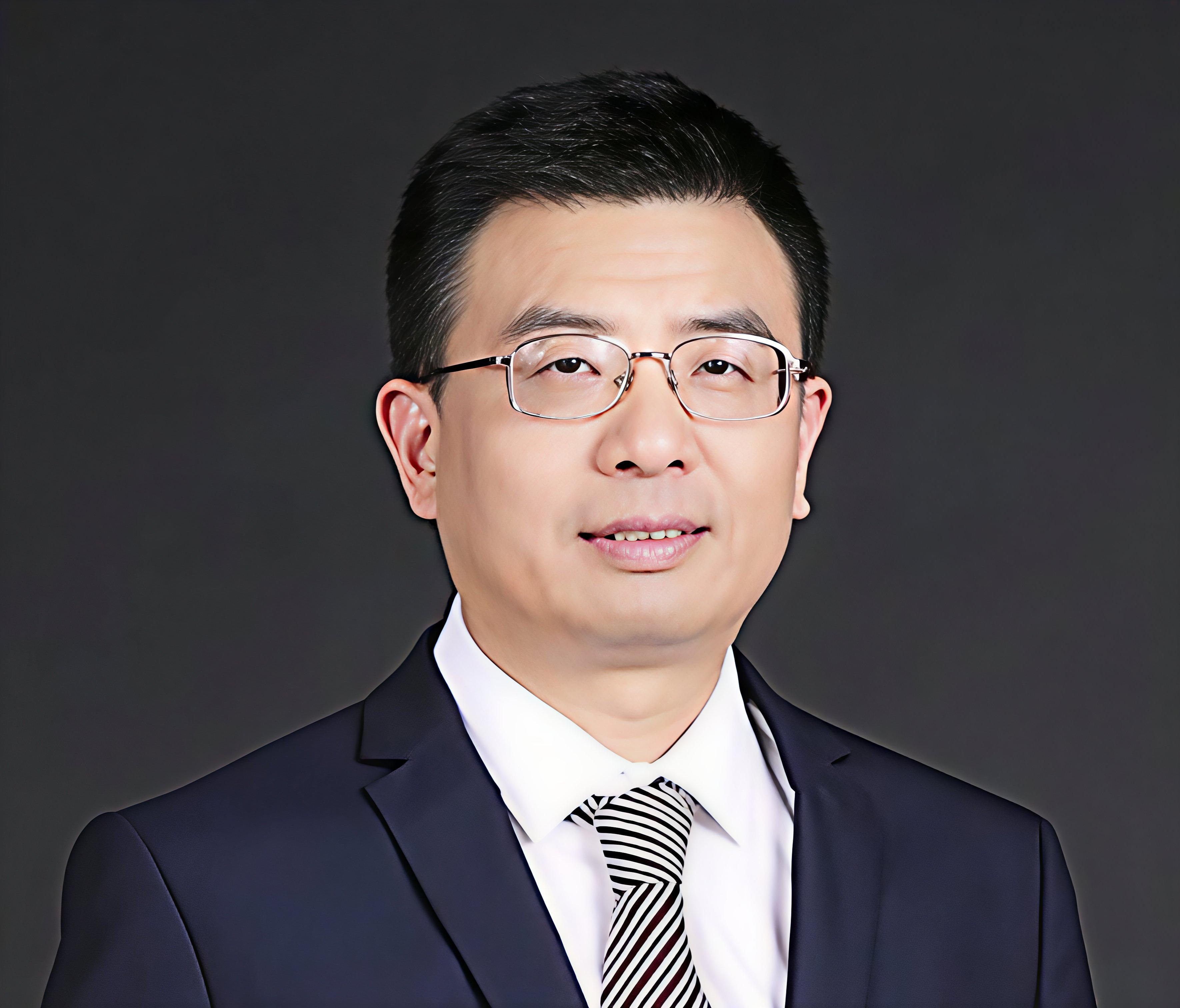
Dong Yu (F) holds a Ph.D. degree in computer science from the University of Idaho (2021-2006), an MS degree in computer science from Indiana University at Bloomington (1995-1996), an MS degree (with honor) in pattern recognition and intelligent control from the Chinese Academy of Sciences (1991-1994), and a BS degree (with honor) in electrical engineering from Zhejiang University (1987-1991). Currently, he is taking the role of Distinguished Scientist and Vice General Manager at Tencent AI Lab. Before joining Tencent America in 2017, he was a Principal Researcher at the Speech and Dialog Research Group, Microsoft Research (Redmond).
Dr. Yu was Chair, IEEE Speech and Language Processing Technical Committee (2021-2022); Member, IEEE SLPTC (2013-2018); Distinguished Industry Speaker of IEEE SPS (2026-2027), a Distinguished Speaker of ACM (2023-2026), a Distinguished Lecturer of APSIPA (2017-2018), Associate Editor ( 2011-2015) and Senior Area Editor (2025-2027) of the IEEE/ACM Transactions on Audio, Speech, and Language Processing; Associate Editor, IEEE Signal Processing Magazine (2008-2011), Associate Editor, ACM Transactions on Asian and Low Resource Language Information Processing (2017-2019), the Lead Guest Editor, IEEE TASLP - Special Issue on Deep Learning for Speech and Language Processing (2010-2011), Guest Editor, IEEE/CAA Journal Of Automatica Sinica - Special Issue on Deep Learning in Audio, Image, and Text Processing (2015-2016), Guest Editor, IEEE Transactions on AI - Special Issue on Conversational AI, Guest Editor, IEEE journal of Selected Topics in Signal Processing (JSTSP) Special Series on AI in Signal & Data Science: Toward Explainable, Reliable, & Sustainable Machine Learning (2024) and Large Language Model: Theory and Applications (2025), Technical Co-Chair of ICASSP 2021, 2027, and 2029, Member, Fellow Search Committee of the IEEE Computational Intelligence Society (2025).
Dr. Yu’s work has been recognized by the 2013, 2016, 2020, and 2022 IEEE/ACM Transactions on Audio, Speech, and Language Processing best paper awards, the 2021 North American Chapter of the Association for Computational Linguistics (NAACL) Best Long Paper Award, the 2022 IEEE Signal Processing Magazine Best Paper Award, the 2022 IEEE Signal Processing Magazine Best Column Award, and the Empirical Methods in Natural Language Processing (EMNLP) 2023 Outstanding Paper Award.
Dr. Yu is known for his pioneering contributions in speech recognition and deep learning. His research spans speech processing and recognition, multi-modal agentic systems, and natural language processing (including large language models), using deep learning techniques.
Lecture Topics
- The Road Toward AGI
- Conversational AI
- Speech and Audio Enhancement