Agentic AI Today and Tomorrow: An Interview with Steven Bathiche, Microsoft Technical Fellow and Vice President
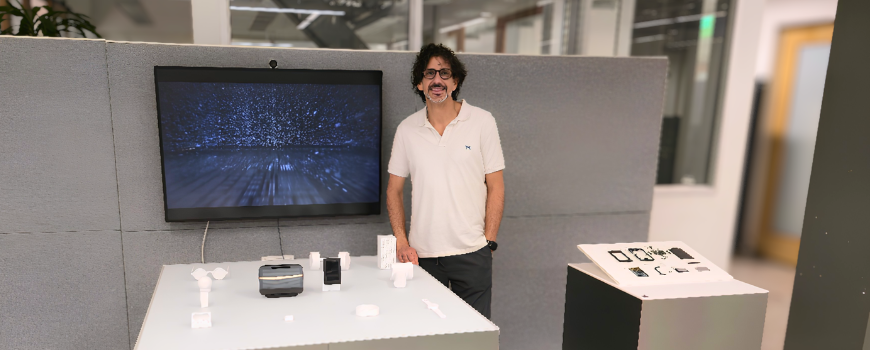
By Ivan Tashev, Editor-in-Chief of the IEEE SPS Industry Signals newsletter
Ivan: Hi Steven, thank you for agreeing to speak with me about Agentic AI. I believe this topic will be of great interest to the readers of the IEEE SPS Industry Signals newsletter.
Let’s start by defining what Agentic AI is. The industry has rapidly evolved from copilots and assistants to discussions about agentic AI. How do you define Agentic AI, and what distinguishes a true agent from today’s AI assistants and chatbots?
Steven: An assistant helps you with a task when you ask. An agent can understand an objective, develop a plan, use tools and information, act, and adapt as conditions change. That adaptability is really important.
The key distinction is not simply intelligence; it is agency. Agency is the defining characteristic of agentic AI. A true agent operates across applications, services, and devices to help accomplish an outcome while remaining grounded in the user’s intent, permissions, and context.
Today, we largely interact with AI through conversation: we ask a question and receive an answer. Agentic AI moves us from answering questions to achieving goals. It represents a shift from AI that tells you how to do something to AI that can responsibly help you get it done.
Ivan: Excellent! Agentic AI is certainly the buzzword of the day. Beyond the current hype, how do you see it reshaping the fundamental model of computing over the next decade?
Steven: For decades, computing has been organized around applications. Users have an intent, but they must translate that intent into a sequence of buttons, menus, files, and individual applications.
Agents begin to invert that model. Instead of people learning how every piece of software works, they can express what they want to accomplish, and agents can coordinate the underlying applications, data, services, and workflows.
That is why I see agents as both a new unit of programming and a new unit of human-computer interaction. Developers will increasingly build capabilities that agents can discover and compose, rather than simply creating fixed user journeys. This is a fundamental shift: developers will increasingly expose capabilities that agents can orchestrate dynamically, while users will interact through intent rather than navigating software step by step.
It is important to understand that applications will not disappear, but they may become less visible. The experience will evolve from software you open to intelligence you invoke.
Ivan: As AI agents become increasingly capable, what role do you see dedicated devices playing in the future of computing?
Steven: PCs and phones will remain absolutely essential, but agents create an opportunity to rethink what a computing device can be.
Most devices today are defined by their applications and screens. An agent-first device, by contrast, can be designed around a person, a role, or a specific environment. It might understand voice, vision, location, identity, and surrounding context, then bring forward the right agent and interface at the right moment.
In many cases, that interface may not resemble a traditional application. It could be a wearable used by a nurse, an intelligent badge for a frontline employee, a shared device in a hotel or retail environment, or an ambient system that moves seamlessly across screens and devices.
The important idea is that the agent should not be confined to a single device. The cloud provides reach and coordination, while local devices provide immediacy, privacy, perception, and a trusted connection to the physical world. The experience should follow the user, with each device contributing what it does best.
Ivan: What technical and design principles are necessary to ensure that users remain in control and can trust increasingly capable agents? Some people worry that highly capable AI systems could eventually act against human interests. How do you view that risk, and what safeguards are needed to prevent it?
Steven: I love this question. Trust must be designed into the architecture, not added later as a warning dialog.
First, an agent must be transparent about what it intends to do, what information it will use, and which systems it will access. Second, its authority should be constrained by explicit permissions, identity, organizational policies, and the sensitivity of the action. Third, users need meaningful opportunities to review, approve, correct, or stop an action.
The level of autonomy should also be proportional to risk. An agent might organize information autonomously, but transferring money, sharing confidential data, or making consequential decisions should require a much higher threshold of verification and consent.
We will also need strong auditability: a clear record of what the agent did, why it did it, which tools and data it used, and how a user can undo or recover from its actions.
The goal is not maximum autonomy. It is appropriate autonomy: enough for the agent to be useful, but never so much that the user loses understanding or control.
Ivan: Just perfect! I especially love the phrase “why it did it.” We are talking about AI reasoning, and that line really captures the core challenge.
Do you envision a future in which a single personal agent coordinates a collection of specialized agents? If so, what standards, protocols, or capabilities will be needed to make such an ecosystem interoperable, trustworthy, and effective?
Steven: I expect people will have a trusted primary agent that understands their preferences, permissions, relationships, and ongoing goals. But that agent will not do everything itself. It will coordinate a much broader ecosystem of specialized agents built by companies, developers, institutions, and individuals.
In that world, the primary agent becomes an orchestrator. It determines which specialized agent is most appropriate, what context should be shared, what authority should be delegated, and how the results should be presented to the user.
For that ecosystem to work, agents need common ways to discover one another, describe their capabilities, exchange context, invoke tools, verify identity, delegate authority, and report their actions. They also need shared expectations around security, privacy, provenance, and accountability.
Interoperability cannot mean unrestricted access. The ecosystem must be open enough to foster innovation while remaining grounded in a trust model that keeps users and organizations in control of their data, permissions, and authority.
The most successful agent ecosystem will not be the one with a single agent that does everything. It will be the one that enables many agents to work together safely and effectively on the user's behalf.
In one of my earlier talks, I described this level of personalization as the top of the pyramid. The better an agent knows you, the more valuable and enduring that relationship becomes. Over time, it accumulates years of interactions, history, preferences, and contextual understanding. That accumulated knowledge becomes deeply personal and uniquely valuable to the individual.
Ivan: Deeply personalized…
Steven: …deeply personalized, and that memory, that accumulated context, is one of the most valuable assets an agent can build over time. It reflects the investment the user has made in that relationship, which is not easily replaced. Starting over with a new agent can feel a lot like starting a new relationship from scratch.
At the same time, I hope we develop the right standards and tools to make that knowledge portable. Users should be able to transfer their history, preferences, and context when they choose, rather than having that information locked into a single system.
Ivan: Now let’s reverse the perspective. If we look back ten years from now, what do you think will be remembered as the most important contribution of agentic AI to society?
Steven: I think the most important contribution will be agency: giving more people the power to turn intent into action, regardless of their expertise, abilities, or circumstances.
Ten years from now, we will not remember agentic AI simply for what it did for us, but for what it enabled more of us to do.
Ivan: Excellent closing. Thank you, Steven.
Further reading
- Composing a new platform for agent-first devices - Command Line
- Microsoft's New AI Devices: First Look at Project Solara
- Inside Microsoft’s Project Solara: A new platform for devices that run AI agents instead of apps – GeekWire
- Microsoft Applied Sciences - YouTube
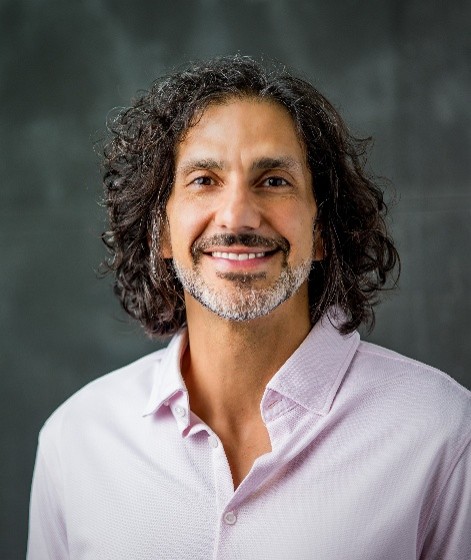 Steven Bathiche leads Microsoft’s Applied Sciences Group (ASG), an interdisciplinary team of scientists, engineers, and A.I. researchers who are evolving the computer to remove barriers, reduce friction, and extend ability through breakthroughs in multimodal input (voice, vision, touch, gesture) and A.I. (edge, cloud, hybrid). He pioneered integrating neural processing units (NPU’s) into Windows PC’s—the foundation of the industry-realigning Copilot+ PC specification. His team developed the models that power dozens of AI features in Windows 11 such as Voice Focus, Paint Cocreator, and Windows Recall. In 2001, Bathiche coined the term “surface computing” for a new class of device he conceptualized, growing into today’s line of Surface devices. He holds more than 120 patents, is a Microsoft Technical Fellow and SID Fellow, and has been recognized as an innovator by Discover, IEEE, and Virginia Tech. ASG consists of 240 experts in seven countries working across fields and disciplines to solve difficult problems.
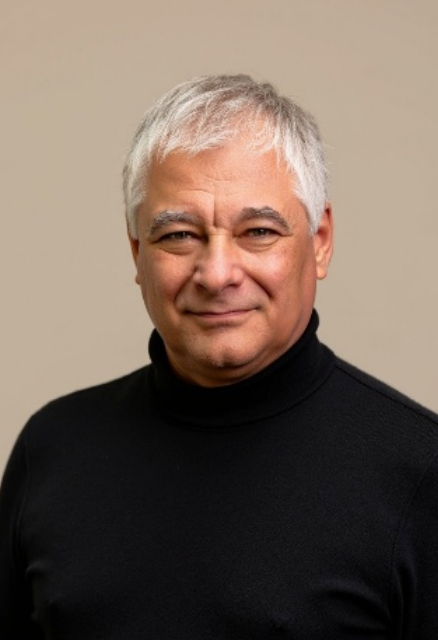 Ivan J. Tashev is a Partner Software Architect at Microsoft Research in Redmond, where he leads the Audio and Acoustics Research Group and works at the intersection of signal processing, artificial intelligence, and human–computer interaction. His research focuses on audio signal processing, spatial audio, speech enhancement, and brain–computer interfaces, contributing to both scientific advances and real-world systems. Over his career, he has played a key role in advancing microphone array technology and speech processing, earning recognition as an IEEE Fellow and receiving the IEEE Signal Processing Society Industrial Innovation Award. He is also an active member of the research community, contributing to publications, conferences, and industry initiatives while helping translate cutting-edge research into impactful technologies.