Signal Processing for Power Systems: An Interview with Professor Yilu Lui from the University of Tennessee in Knoxville
By Ivan Tashev, Editor-in-Chief of the IEEE SPS Industry Signals newsletter
Ivan Tashev: Professor Liu, thank you for agreeing to this interview on the intersection of signal processing and power systems.
Power systems are becoming increasingly measurement driven. From a signal-processing perspective, what are the most important signals we can observe in today’s grid, and what can we learn from them that was simply not possible 10 or 20 years ago?
Professor Liu: Today’s power grid produces an extraordinary range of signals, from synchronized voltage and current phasors measured by PMUs to frequency, harmonics, oscillations, and increasingly high-resolution waveform data captured by advanced sensors. What has changed dramatically is not only the number of measurements, but also their time synchronization, sampling rate, and geographic coverage, which allow us to observe grid dynamics almost in real time. With modern signal-processing and machine-learning techniques, these signals can reveal disturbances, locate their sources, identify oscillations, detect equipment anomalies, and provide early warning of emerging instability. Ten or twenty years ago, many of these phenomena could only be reconstructed after an event; today, we can increasingly see them as they develop and use that information to make the grid more reliable and resilient.
Ivan Tashev: As conventional synchronous generators are increasingly replaced by inverter-based renewable energy sources, the dynamics of the grid are changing significantly. What new signal-processing problems does this create, particularly for estimating inertia, detecting instability, and understanding events in real time?
Professor Liu: As inverter-based resources replace synchronous generators, the grid has less mechanical inertia and its dynamics become faster, more variable, and increasingly determined by power-electronic controls. This makes traditional approaches for estimating inertia and assessing stability much more difficult, because quantities we once treated as relatively fixed now vary with operating conditions and control strategies. Signal processing therefore has to extract reliable indicators of inertia, oscillations, and emerging instability from synchronized, high-rate measurements and distinguish true grid events from control interactions, disturbances, and measurement noise. The ultimate goal is to move from analyzing events after they happen to understanding the grid’s dynamic state in real time, providing operators with early warning and actionable information before a disturbance becomes a major event.
Ivan Tashev: You pioneered FNET/GridEye, which effectively turns the North American power grid into a large-scale sensing system. What have you learned from observing the grid at this scale, and what signal-processing challenges arise when thousands of distributed measurements must be synchronized, interpreted, and acted upon in real time?
Professor Liu: One of the most important lessons from FNET/GridEye is that the power grid is truly a dynamic, interconnected system, and a disturbance in one location can leave a measurable signature across an entire interconnection. With synchronized measurements, we can observe how frequency and phase disturbances propagate, locate major events, identify oscillations, and learn about the dynamic behavior of the grid in ways that individual local measurements cannot provide. The signal-processing challenge is to turn enormous streams of distributed, noisy, and sometimes incomplete measurements into reliable information while the event is still unfolding. Ultimately, the goal is not simply to collect more data, but to extract the right information quickly enough to give operators real-time situational awareness and, eventually, enable faster automated responses.
Ivan Tashev: AI and machine learning are transforming many areas of signal processing. Where do you see AI having the greatest impact on power-grid monitoring and control, and where would you still trust physics-based signal-processing methods more than a learned model?
Professor Liu: AI can have tremendous impact where the grid produces more data than humans can interpret in real time, particularly for anomaly detection, event classification, forecasting, and discovering subtle patterns across large numbers of sensors. At the same time, power systems are governed by well-understood physical laws, and for critical tasks such as stability assessment and protection, I would be very cautious about relying on a purely data-driven black-box model. The most promising direction is therefore to combine physics-based signal processing with AI, using physical constraints to make learned models more robust, interpretable, and trustworthy. In power systems, the goal is not simply to make the most accurate prediction, but to make a decision we can understand and trust when the stability of the grid is at stake.
Ivan Tashev: If you look 10 years ahead, what is the most important unsolved problem at the intersection of signal processing and power systems, and what would you encourage young signal-processing researchers to work on today if they want to have a real impact on the future electric grid?
Professor Liu: I believe one of the biggest unsolved problems is how to achieve reliable, real-time situational awareness and control of a grid whose dynamics are becoming faster, more distributed, and increasingly dominated by power electronics and renewable resources. We need signal-processing methods that can transform massive streams of heterogeneous measurements into trustworthy information about what is happening, why it is happening, and what will happen next. I would encourage young researchers to work at the intersection of advanced sensing, physics-informed AI, real-time signal processing, and control, while developing a deep understanding of the power-system physics behind the data. The future grid will need researchers who can bridge these disciplines and turn measurements into decisions that make our electric infrastructure more reliable, resilient, and intelligent.
Ivan Tashev: Thank you for the excellent closing remarks, Professor Liu.
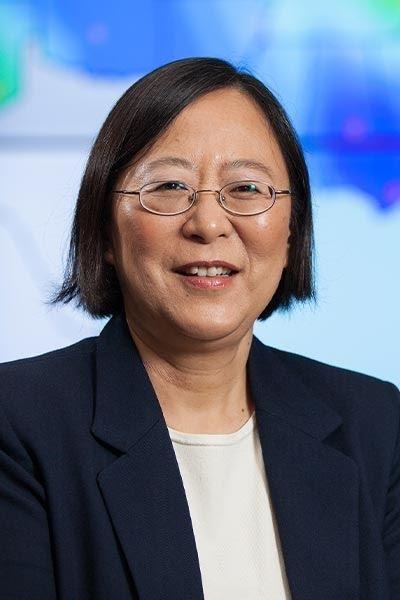 Professor Yilu Liu is the UT–Oak Ridge National Laboratory Governor’s Chair Professor of Electrical Engineering and Computer Science at the University of Tennessee, Knoxville, and a leading researcher in power systems and smart grids. She also serves as Deputy Director of the Center for Ultra-Wide-Area Resilient Electric Energy Transmission Networks (CURENT). Her research focuses on power-grid monitoring, dynamic modeling, stability, and wide-area measurement and control systems. She pioneered FNET/GridEye, a GPS-synchronized, wide-area monitoring network that enables real-time observation of power-grid disturbances and dynamics across North America. A Fellow of IEEE and a member of the US National Academy of Engineering, she has received numerous honors, including the IEEE Power & Energy Society’s 2020 Wanda Reder Pioneer in Power Award and multiple R&D 100 Awards. She received her Ph.D. in Electrical Engineering from The Ohio State University in 1989 and has dedicated her career to improving the reliability, resilience, and intelligence of modern electric power systems.
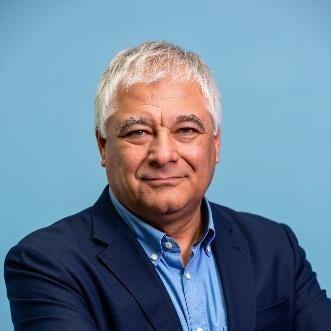
Ivan J. Tashev is a Partner Software Architect at Microsoft Research in Redmond, where he leads the Audio and Acoustics Research Group and works at the intersection of signal processing, artificial intelligence, and human–computer interaction. His research focuses on audio signal processing, spatial audio, speech enhancement, and brain–computer interfaces, contributing to both scientific advances and real-world systems. Over his career, he has played a key role in advancing microphone array technology and speech processing, earning recognition as an IEEE Fellow and receiving the IEEE Signal Processing Society Industrial Innovation Award. He is also an active member of the research community, contributing to publications, conferences, and industry initiatives while helping translate cutting-edge research into impactful technologies.