Underwater Image Enhancement via a Robust yet Efficient Dual Prior Optimized Method
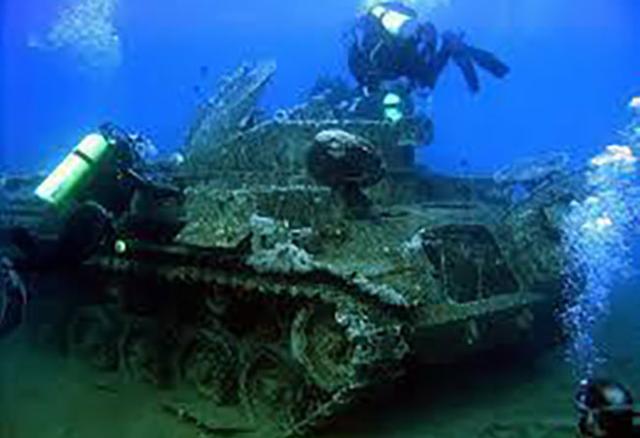
Underwater images are highly susceptible to quality degradation due to light's scattering and absorption [1,2]. Unfortunately, underwater images with deteriorating quality impose many limitations in following visual perception analysis and practical underwater applications.
Can Lensless Cameras Redefine Depth of Field in Photography?
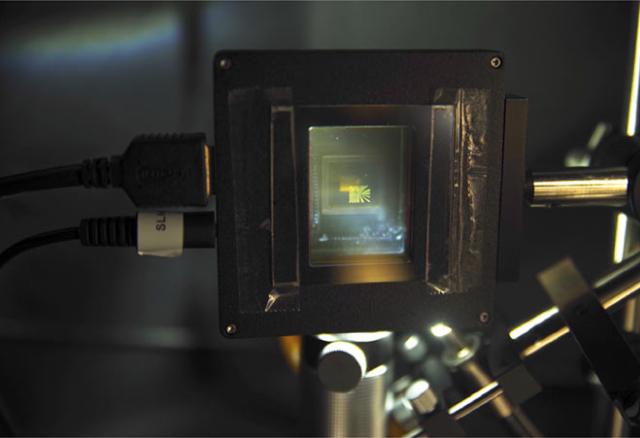
This post introduces a novel approach to extending the depth of field (DOF) in lensless cameras using optimized radial coded masks. Our proposed method overcomes the limitations of previous and generic coded mask designs by employing a radial-shape-constrained optimization procedure, resulting in improved optical transfer functions while enabling extended DOF. Through simulations and prototype experiments, we demonstrate that our optimized radial mask achieves superior imaging quality compared to hand-crafted radial patterns and larger DOF than non-radial masks.
Occlusion-Aware Human Mesh Model-Based Gait Recognition

An occlusion-aware model for gait video processing uses SMPL-based human mesh models and machine learning to achieve superior recognition in challenging surveillance videos.
Physics Makes Black-box Deep Learning Models Transparent
Electromagnetic inverse scattering problems (ISPs) are crucial in noninvasive imaging but challenging due to nonlinearity and computational costs. This blog explores machine learning-based ISP solvers with physics-guided loss functions, emphasizing the role of near-field priors and multiple-scattering effects. Numerical experiments highlight the advantages and limitations of these approaches.
Optimize Your Signal Processing with Bayesian Optimization

Explore how Bayesian optimization enhances signal processing applications by providing efficient algorithm design solutions in the signal processing toolbox.
Devising Transformers as an Autoencoder for Unsupervised Multivariate Time Series Imputation

Inspired by the capabilities of transformer models, we introduce a novel method named Multivariate Time-Series Imputation with Transformers (MTSIT). This entails an unsupervised autoencoder model featuring a transformer encoder, leveraging unlabeled observed data for simultaneous reconstruction and imputation of multivariate time-series.
Unlocking Real-Time 3D Imaging with Single-Photon LiDAR in Challenging Environments

Our method overcomes 3D underwater imaging challenges by offering high-frame-rate video 3D imaging (>100 fps), providing uncertainty measures for estimates, and extending applicability to various obscurant media imaging.
PANNs: Large-Scale Pretrained Audio Neural Networks for Audio Pattern Recognition

Pretrained audio neural networks (PANNs) are trained on 5800 hours of AudioSet data that can be used to recognize hundreds of sound types in the natural world.
Deep Learning for All-in-Focus Imaging

Focus stacking is an effective approach to extending the depth of field of a camera, yet is challenging with regard to 1) controlling focal planes in forming a stack and 2) fusing the focal stack into composites free from defocusing, i.e., all-in-focus. We propose a deep learning all-in-focus imaging pipeline as a novel solution for focus stacking.
Underwater Image Enhancement via a Fast yet Effective Traditional Method

Addressing underwater image challenges, our method MLLE enhances color, contrast, and details efficiently. Outperforming competitors, it processes 1024×1024×3 images in under 1s on a single CPU. Experiments show improved underwater image segmentation, keypoint detection, and saliency detection.
IEEE Signal Processing Society on 

@ieeeSPS
13.5K+ subscribers‧250+ videos