Speech and Language Processing
Welcome to the Summer 2026 edition of the Speech and Language Processing Technical Committee (SLTC) Newsletter.
In this edition, we honor the memory of one of our distinguished community members. In addition, we share several updates from the ICASSP Area Chairs and subcommittees.
== Honoring a Distinguished Member of Our Community ==
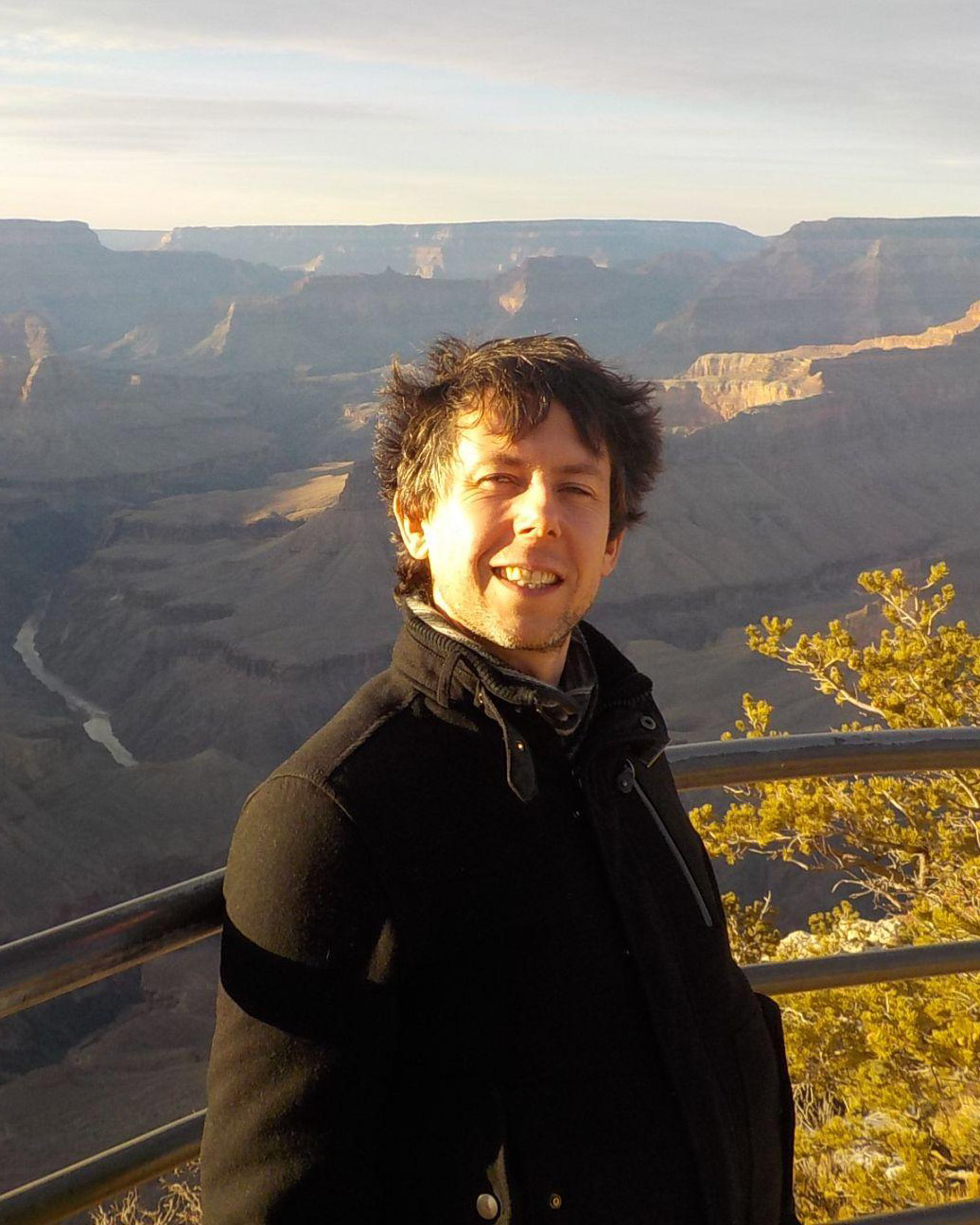
We are deeply saddened by the passing of Emmanuel Vincent, a distinguished researcher and a highly respected member of the speech and audio processing community.
Emmanuel made fundamental contributions to the fields of speech enhancement, source separation, robust speech recognition, and machine listening. Through his scientific leadership, innovative research, and commitment to open and reproducible evaluation, he helped advance the state of the art in audio and speech technologies. He influenced generations of researchers around the world.
His work bridged methodological rigor with a clear vision of how speech and audio technologies can improve everyday life. Beyond his many technical achievements, Emmanuel was a thoughtful collaborator, mentor, community leader, and friend. His generosity, insight, and dedication enriched not only the research he pursued but also the people and communities with whom he worked.
We sincerely thank Emmanuel for his tremendous contributions to the speech and audio research community. His scientific legacy and his impact on colleagues, students, and friends will continue to be felt for many years to come. He will be greatly missed.
==ICASSP Area Chair Report==
by Shinji Watanabe
ICASSP 2026 experienced record-breaking participation, with more than 1,700 submissions to the Speech and Language Processing Technical Committee (SLTC), representing a substantial increase from approximately 1,200 submissions in the previous year. SLTC is now the second-largest technical committee within the IEEE Signal Processing Society in terms of submission volume. To manage this growth, the conference deployed an extensive review infrastructure consisting of more than 1,200 reviewers, 148 meta-reviewers, and 17 area chairs. These efforts resulted in an acceptance rate below 40%, comparable to those of other leading conferences in the field.
Despite this success, the research landscape within SLTC continues to evolve rapidly. In particular, the increasing number of submissions focused on pure text processing has shifted the distribution of topics, with automatic speech recognition (ASR) no longer representing the largest submission area. This trend has created significant organizational challenges, including shortages of qualified reviewers, meta-reviewers, and session chairs with expertise in emerging NLP-related topics. Addressing these challenges will require adapting our review management strategies, expanding the reviewer and meta-reviewer pool in these areas, and ensuring that the conference maintains its rigorous evaluation standards as submission patterns continue to change.
At the same time, SLTC remains committed to its core mission of advancing speech and spoken language technologies. Moving forward, we are working on refining the EDICS structure to strengthen the representation of speech and spoken language processing topics, encourage high-quality submissions in these areas, and maintain a balanced technical program that reflects both the historical strengths and emerging directions of the community.
== New conference: IEEE International Conference on Audio, Speech, and Language Intelligence (ASLI) ==
By Shinji Watanabe
The newly established IEEE International Conference on Audio, Speech, and Language Intelligence (ASLI) brings together the core activities of the IEEE Automatic Speech Recognition and Understanding (ASRU) Workshop and the IEEE Spoken Language Technology (SLT) Workshop into a single flagship conference. ASLI is envisioned as the premier global venue for cutting-edge research in speech, language, and audio intelligence, with a strong emphasis on both scientific excellence and broad community engagement. To maintain a high-quality technical program, ASLI will adopt a two-track acceptance model. The main conference track will target an acceptance rate of approximately 20%, ensuring a highly selective venue for the most impactful contributions. In addition, an additional track will accept approximately another 20% of submissions, providing opportunities for emerging, interdisciplinary, and diverse research directions. Together, these tracks will yield an overall acceptance rate exceeding 40%, comparable to historical ASRU and SLT acceptance rates.
This structure preserves the inclusive spirit and legacy of both conferences while simultaneously elevating the selectivity and prestige of the flagship track. The first ASLI conference is scheduled to take place in Singapore from November 30 to December 4, 2027, and will be led by General Chairs Shinji Watanabe and Kai Yu. The organizers are currently soliciting community feedback and expressions of interest as they shape this new flagship event, marking an important milestone for the speech, language, and audio research community.
==Challenges==
Jesus Villalba, Vice Chair: Nobutaka Ito, Members: Daniele Giacobello, Ryuichiro Higashinaka, Soumi Maiti
Beyond Transcription Challenge (BeTraC)
This challenge focuses on generating structured clinical notes (SOAP format) directly from long doctor–patient conversations without using intermediate transcripts. It tests whether end-to-end audio models can perform reasoning over multi-speaker, long-form speech, under strict constraints that separate lightweight and more flexible large-model approaches. The goal is to benchmark and improve end-to-end systems, compare them to cascaded pipelines, and evaluate generalization to real clinical audio.
Website: https://betrac.github.io
SmartGlasses Challenge: Egocentric Speech Interaction on AI Glasses
This challenge targets speech interaction on wearable devices like AI-powered glasses, which introduce egocentric audio conditions and complex conversational contexts. Systems must handle noisy, dynamic environments across scenarios such as human-machine interaction and multi-party conversations, while being evaluated on both speech recognition and language understanding.
Website: https://aslp-lab.github.io/SmartGlasses
MISP 2026 Challenge: Audio-Visual-Text Query-by-Example Keyword Spotting (AVT-QEKS)
This challenge focuses on detecting whether a spoken keyword appears in an audio-visual segment using multimodal inputs. It emphasizes robust keyword spotting under realistic, noisy conditions and promotes research on multimodal fusion and generalization to both known and unseen keywords.
Website: https://coalboss.github.io/misp2026
REAL-TSE Challenge: Real-world Target Speaker Extraction in Conversational Speech
This challenge addresses extracting a target speaker from real-world multi-speaker conversations using enrollment samples. It emphasizes authentic conversational conditions, including overlapping speech and natural turn-taking, with both real-time and offline tracks to balance latency and performance.
Website: https://real-tse.github.io/challenge
==Member Election==
(Chair: Sabato Marco Siniscalchi, Vice Chair: Jesper Rindom Jensen, Members: Douglas O'Shaughnessy, Jan Skoglund, Chao Zhang, Chenghua Lin)
IEEE SPS Speech and Language Processing Technical Committee Nominations 2026
The Member Election Subcommittee of the SLTC is seeking nominations for new SLTC Members for a 3-year term (2027-2029). Nominations should be submitted by filling out the web form at https://forms.gle/N6Mj2MFJf5hyLzhT8. The form asks for a short bio, a list of professional volunteer work and leadership activities, and a position statement and/or vitae as well as nominee information. The nomination deadline is July 27, 2026.
The IEEE and the IEEE Signal Processing Society are committed to promoting diversity, equity, and inclusion (DEI) in all their activities. As part of IEEE’s mission to foster technological innovation and excellence to benefit humanity, we recognize that achieving this goal requires the talents and perspectives of people with different personal, cultural, and disciplinary backgrounds. As the SLTC, we believe that a diverse and inclusive environment enriches our technical committee and promotes innovation, collaboration, and excellence. Consequently, we strongly encourage nominations of individuals from underrepresented groups, including but not limited to women, minorities, and individuals from geographically diverse regions.
New member candidates can be self-nominated or nominated by current SLTC members. Members will serve a term of three years. Past SLTC members are eligible to be nominated for a second term. Current SLTC members may also be nominated for a second consecutive term but would then not be eligible to vote in this new member election for their nomination areas. Additional terms are allowed after leaving the SLTC, but at least a 3-year gap in service is required.
New members must be willing to review papers that are submitted to the Society's conferences within the area of the SLTC, review papers for workshops owned or co-owned by the SLTC, serve in the subcommittees established by the SLTC, and perform other duties as assigned. SLTC members will be elected by the members of the SLTC itself based on the needs of the SLTC. The election results will be finalized by August 20, 2026.
The rights and duties of an SLTC member are described here: http://www.signalprocessingsociety.org/technical-committees/list/sl-tc/
The following are the nominee requirements:
- The candidate must be a member of the IEEE Signal Processing Society.
- The candidate should be willing to serve if elected. This means active participation, including prompt paper reviews for 4 ICASSPs (2027-2030), active participation in accomplishing SLTC sub-committee duties, and best efforts to attend meetings and respond appropriately to action items. While the formal term is 2027-2029, because of the timing of the ICASSP review cycle, ICASSP review duties will begin almost immediately upon election prior to the term (September-December 2026) and conclude after the formal term (January-February 2030).
==Student & Conference Paper Awards==
We are pleased to recognize that a paper from the speech and language processing community has been awarded an ICASSP 2026 Best Student Paper Award. Additionally, we announce the recipients of this year’s SLTC student grants, which were selected from the highly competitive pool of speech and language papers accepted for presentation at ICASSP 2026. We congratulate the following researchers and their co-authors on their exemplary contributions to the field:
- ICASSP 2026 Best Student Paper Award
SSVD-O: Parameter-Efficient Fine-Tuning with Structured SVD for Speech Recognition
Pu Wang (KU Leuven), Shinji Watanabe (Carnegie Mellon University), Hugo Van hamme (KU Leuven)
- Spoken Language Processing Student Travel Grant
Scaling Ambiguity: Augmenting Human Annotation in Speech Emotion Recognition with Audio-Language Models
Wenda Zhang (University of Melbourne), Hongyu Jin (University of Melbourne), Siyi Wang (University of Melbourne), Zhiqiang Wei (Xi'an Jiaotong University), Ting Dang (University of Melbourne)
- The IEEE Ganesh N. Ramaswamy Memorial Student Grant
Subgraph Localization in the Subbands for Partially Spoofed Speech Detection
Ji Liu (TianJin University), Chenghan Lin (TianJin University), Longbiao Wang (TianJin University), Kong Aik Lee (The Hong Kong Polytechnic University)
==Workshops==
(Chair: Chi-Chun Lee, Vice Chair: Shi-Xiong Zhang, Members: Sibel Oyman, Matthew Wiesner)
The IEEE SLT 2026 Workshop (https://attend.ieee.org/slt-2026/) will take place in Palermo, Sicily, a city that combines a growing technological ecosystem with a distinctive cultural heritage. Palermo’s emerging tech hubs and digital innovation initiatives offer valuable opportunities for collaboration with local researchers, startups, and industry partners. The city also provides an engaging backdrop for attendees, with its renowned cuisine, historical landmarks, and natural beauty, which foster networking and creative inspiration. Convenient international access is ensured through the Falcone-Borsellino Airport, which is served by around 30 airlines.
SLT will be held from December 13 to 16, 2026, in Palermo, Italy, bringing together researchers and practitioners from academia and industry.
The conference venue, Hotel Saracen Sands, features 14 fully equipped meeting rooms accommodating 20 to 1,000 participants, along with 236 guest rooms. Its large seafront restaurant and spacious exhibition areas make it suitable for posters, demos, and technical showcases. Located 15 km from central Palermo and midway to the airport, the venue offers both convenience and comfort.
IEEE SLT 2026 will center on the theme Social Wellbeing in the Digital Privacy Era, highlighting the need to advance spoken language technologies responsibly while supporting their expanding impact in healthcare, education, and human–machine interaction. Continued progress in deep learning is accelerating innovation, transforming once-futuristic SLT applications into practical, widely deployable tools. All conventional SLT topics will also be included in the program. In addition, Challenge, Special Sessions, and Workshops will enrich the event with focused research activities and community engagement.
The Gala Dinner will be held at the historic Villa Boscogrande Cardillo, where memorable scenes from The Leopard (Il Gattopardo) were filmed. The villa provides a culturally rich setting tied to the story of Sicilian aristocracy during the Italian unification, exploring themes of change, tradition, and resilience, adding a meaningful cultural dimension to the event.
The organizing committee is also working on offering several guided tours, allowing interested delegates to explore the historic and cultural sites of Sicily.
This newsletter is an ideal forum for updates, reports, announcements, and editorials, which don't fit well with traditional journals. We welcome your contributions, as well as calls for papers, job announcements, comments, and suggestions. You can submit job postings here and contact the TC via this form or email speechnewseds@listserv.ieee.org to propose articles. To subscribe to the Newsletter, send an email with the command "subscribe speechnewsdist" in the message body to listserv@listserv.ieee.org.
If you want to stay connected to the IEEE SLTC between newsletters, we are on LinkedIn (https://www.linkedin.com/company/ieeeslp ) and Slack (ieeesltc.slack.com ).
From all of us: Stay safe and do good.
Leibny Paola Garcia Perera Editor
Leda Sari, Communications Vice-Chair