Sep
15

Date: 15-September-2026
Time: 10:00 AM ET (New York Time)
Presenter: Dr. Sherif Abdulatif
Based on the IEEE Xplore® article under the same title
Published IEEE Transactions on Audio, Speech, and Language Processing, April 2024.
Download article: Original article will be made publicly available for download on the day of the webinar for 48 hours. ARTICLE LINK
About this topic:
Modern speech enhancement systems must operate reliably under a wide range of real-world distortions, including background noise, reverberation, and bandwidth limitations. This webinar presents CMGAN, a Conformer-Based Metric-GAN framework for monaural speech enhancement in the complex time-frequency domain.
The talk will introduce the motivation behind combining magnitude masking, complex spectrogram refinement, conformer-based sequence modeling, and metric-guided adversarial learning. CMGAN uses a shared encoder to process magnitude and complex spectral components, followed by two-stage conformer blocks that capture temporal and frequency dependencies. A dedicated mask decoder enhances the magnitude representation, while a complex decoder refines the real and imaginary components to improve both magnitude and phase reconstruction. In addition, a metric discriminator is used to optimize perceptually meaningful quality measures that are not directly differentiable.
The webinar will discuss how this architecture addresses three major speech enhancement tasks: speech denoising, dereverberation, and speech super-resolution. It will also summarize key experimental findings, including comparisons with state-of-the-art methods, ablation studies on architectural and loss-function choices, and evaluations using objective metrics, DNS-MOS, and listening tests. The presentation aims to provide both conceptual insight and practical guidance for researchers interested in deep learning-based speech enhancement, complex time-frequency modeling, and perceptual optimization.
About the presenter:
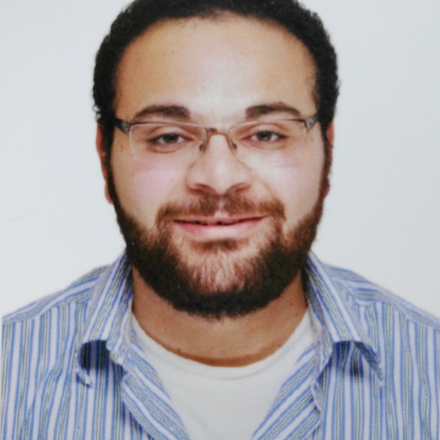
Dr. Sherif Abdulatif
Sherif Abdulatif received the M.Sc. degree in communication engineering and information technology and Ph.D. degree in electrical engineering from the University of Stuttgart, Stuttgart, Germany, in 2015 & 2023 respectively.
He is currently a Research Scientist (AI Expert) with Bosch Corporate Research, Germany, working on AI-based radar perception for autonomous driving since 2023. From 2018 to 2023, he was a Research Assistant at the Institute of Signal Processing and System Theory, University of Stuttgart, where he focused on generative deep learning methods for speech and radar signal enhancement. His research interests include signal enhancement, time-frequency processing, and deep generative models for multimodal sensing.