The following is a list of Signal Processing Society's distinguished lecturers.

2027 Distinguished Lecturers
George C. Alexandropoulos
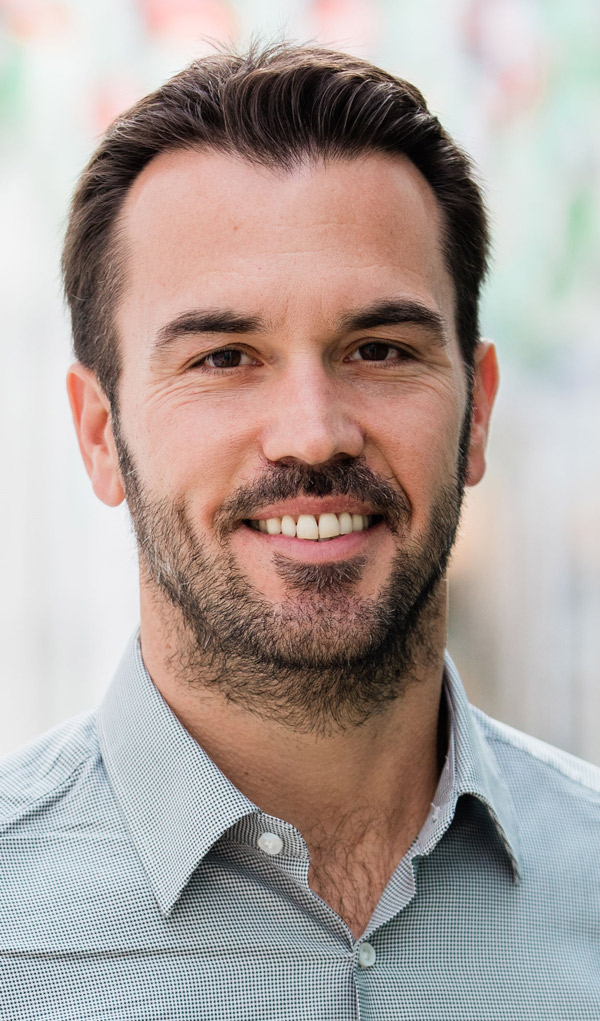 George C. Alexandropoulos (SM) received the Engineering Diploma (Integrated M.S.c), M.A.Sc., and Ph.D. degrees in Computer Engineering and Informatics, School of Engineering, University of Patras, Greece in 2003, 2005, and 2010, respectively. He has held senior research positions at various Greek universities and research institutes, and he was a Senior Research Engineer and a Principal Researcher, Mathematical and Algorithmic Sciences Lab, Paris Research Center, Huawei Technologies France, and at the Technology Innovation Institute, Abu Dhabi, United Arab Emirates, respectively. He is currently an Associate Professor, Department of Informatics and Telecommunications, School of Sciences, National and Kapodistrian University of Athens (NKUA), Greece and an Adjunct Professor, Department of Electrical and Computer Engineering, University of Illinois Chicago, Chicago, IL, USA.
Prof. Alexandropoulos served as Editor, IEEE Transactions on Communications, IEEE Transactions on Wireless Communications, IEEE Transactions on Green Communications and Networking, and IEEE Transactions on Mobile Computing and currently serves as Senior Area Editor, IEEE Transactions on Signal Processing and Editor, IEEE Communications Magazine.
Prof. Alexandropoulos is a Senior Member, IEEE Communications Society (since 2010), Signal Processing Society (since 2012), and Vehicular Technology Society (since 2022); Chair, EURASIP Technical Area Committee on Signal Processing for Communications and Networking (since 2024); Registered Professional Engineer, Technical Chamber of Greece (since 2003); Member, IEEE Signal Processing Society’s Signal Processing for Communications and Networking Technical Committee (since 2024) and Integrated Sensing and Communication Technical Working Group (since 2023); Distinguished Lecturer of the IEEE Communications Society (2022 to 2024); Distinguished Lecturer of the IEEE Signal Processing Society (2027-2028 term).
Prof. Alexandropoulos received the Best Ph.D. Thesis Award (2010); IEEE Communications Society Best Young Professional in Industry Award (2018); EURASIP Best Paper Award of the IEEE Journal on Wireless Communications and Networking (2021); IEEE Marconi Prize Paper Award in Wireless Communications (2021); Best Paper Awards from the IEEE Global Communications Conference (GLOBECOM) (2021) and IEEE Vehicular Technology Conference (VTC) (Spring 2025); Best Paper and Honorable Mention Awards: Intelligent and Converged Networks Journal (2025); IEEE Communications Society Fred Ellersick Prizes (2023 and 2024); IEEE Communications Society Leonard G. Abraham Prize (2024); and NKUA’s Research Excellence Award for the academic year (2023-2024).
Prof. Alexandropoulos’ research interests span the general areas of algorithmic design and performance analysis for wireless networks with emphasis on multi-antenna transceiver hardware architectures, full duplex MIMO, active and passive RISs, ISAC, millimeter wave and THz communications, as well as distributed machine learning algorithms.
George C. Alexandropoulos, PhD
Department of Informatics and Telecommunications
National and Kapodistrian University of Athens (NKUA)
Panepistimiopolis Ilissia, 16122 Athens, Greece
URL: www.alexandropoulos.info
Lecture Topics
- Wave-Domain Signal Processing and Neural Computing
- Modeling And Optimization of Dynamic Metasurface Antennas and Reconfigurable Intelligent Surfaces
- Integrated Sensing and Communications with XL MIMO Architectures
- Machine Learning for Wireless Communications, Localization, and Sensing
- Distributed Optimization for Cell-Free MIMO Systems
Jeff Fessler
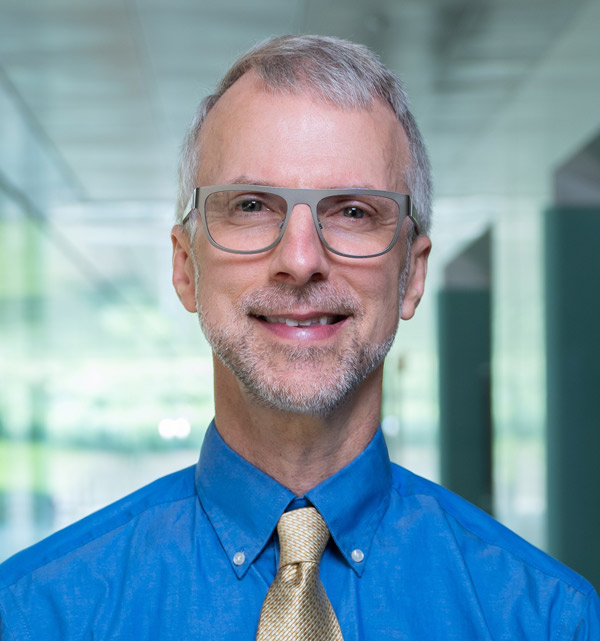 Jeff Fessler (F) is the William L. Root Distinguished University Professor of EECS at the University of Michigan, and he served as ECE Interim Chair from 2024-2025. He received the BSEE degree from Purdue University in 1985, the MSEE degree from Stanford University in 1986, and the M.S. degree in Statistics from Stanford University in 1989. From 1985 to 1988 he was a National Science Foundation Graduate Fellow at Stanford, where he earned a Ph.D. in electrical engineering in 1990. He has worked at the University of Michigan since then. From 1991 to 1992 he was a Department of Energy Alexander Hollaender Post-Doctoral Fellow in the Division of Nuclear Medicine. From 1993 to 1995 he was an Assistant Professor in Nuclear Medicine and the Bioengineering Program. He is now a Professor in the Departments of Electrical Engineering and Computer Science, Radiology, and Biomedical Engineering.
Prof. Fessler became an ISMRM Senior Fellow in 2025, and a Fellow of the IEEE in 2006, for contributions to the theory and practice of image reconstruction. He received the Francois Erbsmann Award for his IPMI93 presentation, the Edward Hoffman Medical Imaging Scientist Award in 2013, and an IEEE EMBS Technical Achievement Award in 2016. He received the 2023 Steven S. Attwood Award, the highest honor awarded to a faculty member by the College of Engineering.
Prof. Fessler has served as an Associate Editor for the IEEE Transactions on Medical Imaging, the IEEE Signal Processing Letters (2000-2002), the IEEE Transactions on Image Processing (1996-1999) (2012-2014), the IEEE Transactions on Computational Imaging (2023-2024), the SIAM J. on Imaging Science, and as a Senior Associate Editor for the IEEE Transactions on Computational Imaging (2020-2025). He has chaired the IEEE Transactions on Medical Imaging Steering Committee and the International Symposium on Biomedical Imaging Steering Committee. He was Co-Chair, SPIE Conference on Image Reconstruction and Restoration (1997); Technical Program Co-Chair, IEEE International Symposium on Biomedical Imaging (ISBI) (2002); and General Chair, ISBI (2007).
Prof. Fessler’s research interests are in statistical aspects of imaging problems, and he has supervised doctoral research in PET, SPECT, X-ray CT, MRI, and optical imaging problems.
Jeffrey A. Fessler
University of Michigan
EECS Dept.
1301 Beal Ave.
Ann Arbor, MI 48109-2122
P: (734)763-1434
Web: http://web.eecs.umich.edu/˜fessler
Lecture Topics
- Efficient Genai Models for Medical Imaging
- Score-Based Generative Models with Medical Imaging Applications
- The AI of the Beholder in Medical Imaging
Zheng-Hua Tan
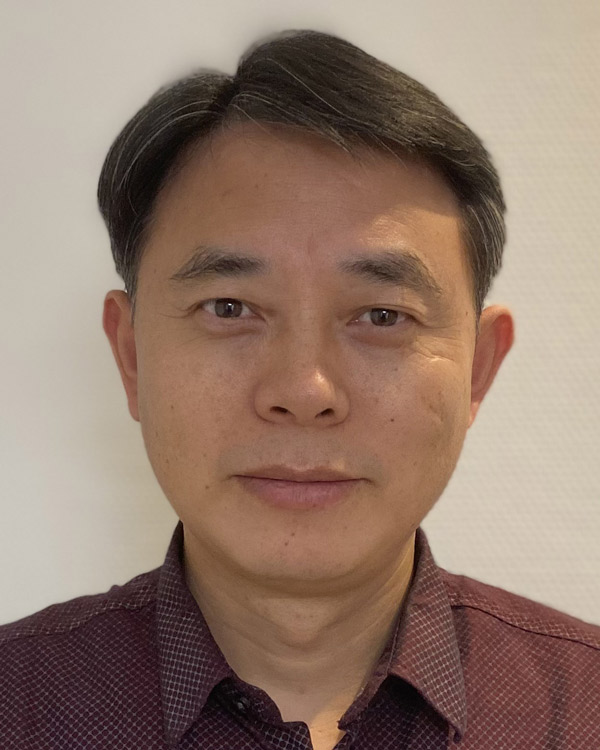 Zheng-Hua Tan (SM) received the B.Sc. degree (1986-1990) and M.Sc. degree (1993-1996) in electrical engineering from Hunan University, Changsha, China, and the Ph.D. degree in electronic engineering (1997-1999) from Shanghai Jiao Tong University, Shanghai, China. He is currently Professor in the Department of Electronic Systems at Aalborg University, Aalborg, Denmark and a Co-Head of the Centre for Acoustic Signal Processing Research. Prof. Tan is also a Co-Lead of the Pioneer Centre for AI, Denmark.
Prof. Tan was a Visiting Scientist, Computer Science and Artificial Intelligence Laboratory (CSAIL), MIT, USA, (2012, 2017, and 2022); Associate Professor, Department of Electronic Engineering, Shanghai Jiao Tong University, China, (1999 to 2001); Postdoctoral Fellow, AI Laboratory, Korea Advanced Institute of Science and Technology, Korea, (2000). In 2022, he received the IEEE Signal Processing Society Best Paper Award and the International Speech Communication Association Best Research Paper Award.
Prof. Tan has been Lead Editor, IEEE Journal of Selected Topics in Signal Processing Special Series on AI in Signal and Data Science (since 2023); Member, IEEE SPS Speech and Language Processing Technical Committee (from 2024); Chair, IEEE SPS Machine Learning for Signal Processing Technical Committee (2021 to 2022); Member of the Committee (2018 to 2023); Member, IEEE SPS Technical Directions Board (2021 to 2022); Member, IEEE SPS Conferences Board (2022 to 2024); Associate Editor, IEEE/ACM Transactions on Audio, Speech and Language Processing (2019 to 2023); General Chair of IEEE International Conference on Acoustics, Speech, and Signal Processing (ICASSP) (2029); Technical Program Committee Co-Chair, ICASSP (2028); Technical Program Committee Vice-Chair, ICASSP (2024); and General Chair, IEEE Machine Learning for Signal Processing (MLSP) (2018).
Prof. Tan’s research interests include machine learning, deep learning, noise-robust speech processing, and multimodal signal processing.
Zheng-Hua Tan
Aalborg University, Department of Electronic Systems
Fredrik Bajers Vej 7, 9220 Aalborg, Denmark
P: +45 9940 8686
URL: https://zhenghuatan.es.aau.dk
Lecture Topics
- Self-Supervised Learning for Multimodal Data
- Emerging Neural Architectures for Audio and Speech Processing
- Deep Learning-Based Speech Enhancement and Separation
Lav R. Varshney
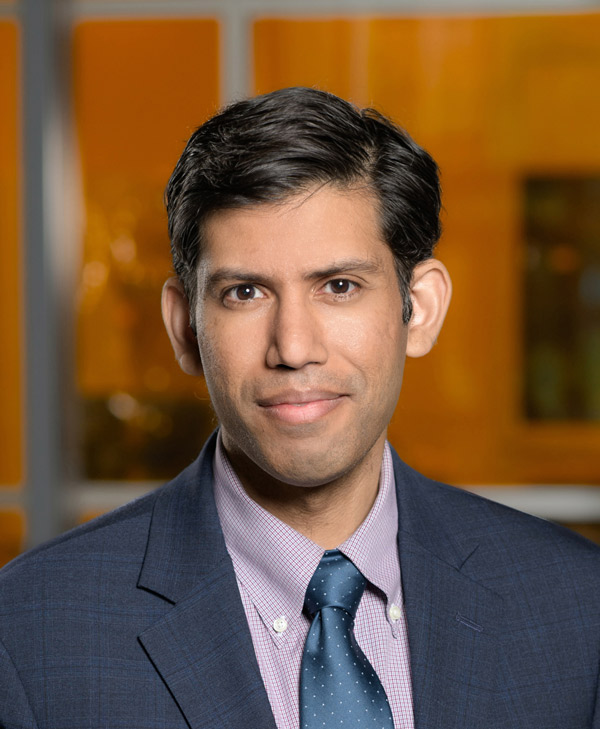 Lav R. Varshney (SM) received his B.S. degree from Cornell University and his S.M. and Ph.D. degrees from the Massachusetts Institute of Technology. He is the Della Pietra Infinity Professor and inaugural Director of the AI Innovation Institute at Stony Brook University.
Dr. Varshney is co-founder and CEO of Kocree, Inc., a startup company building novel human-controllable and formally-verifiable AI for discovery and creativity, and chief scientist of Ensaras, Inc., a startup company focused on AI and wastewater treatment. He holds appointments at RAND Corporation and at Brookhaven National Laboratory. He was previously on the faculty of the University of Illinois Urbana-Champaign, a visiting scholar at Northwestern's Kellogg School of Management, a principal research scientist at Salesforce Research AI where he was part of the team that developed and open weight released the first billion-parameter large language model, and a research staff member at IBM Research where he led the design and deployment of the first commercially-successful generative AI technology. He is a former White House staffer, having served on the National Security Council staff as a White House Fellow, where he contributed to national/international AI and wireless communications policy.
Dr. Varshney’s research interests include statistical signal processing, information theory, and artificial intelligence.
Lecture Topics
- Information Lattice Transform
- On Theories for AI Scaling Laws and Information Batteries
Wenwu Wang
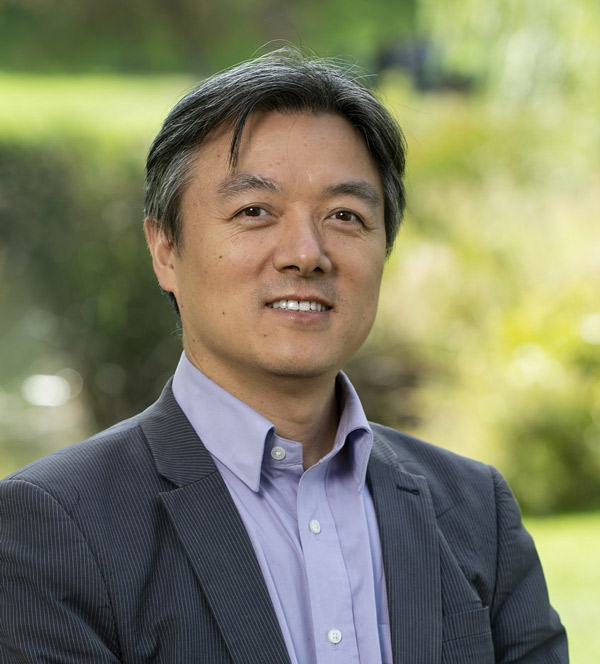 Wenwu Wang (F) is a Professor of Signal Processing and Machine Learning at the University of Surrey, UK, within the Centre for Vision, Speech and Signal Processing (CVSSP). He is also the Associate Head (External Engagement) of the School of Computer Science and Electronic Engineering, and a Principal AI Fellow at the Surrey Institute for People-Centred Artificial Intelligence (PAI).
Prof. Wang was elevated to IEEE Fellow (2026). He has received recognitions, including the Meta Distinguished Faculty Award (2026), Audio Engineering Society Best Technical Paper Award (2025), IEEE Signal Processing Society Young Author Best Paper Award (2022), International Challenge on Detection and Classification of Acoustic Scenes and Events (DCASE) Judge’s Awards (2020, 2023, 2024), DCASE Reproducible System Awards (2019, 2020), and International Conference on Latent Variable Analysis and Signal Separation Best Student Paper Award (2018).
Prof. Wang serves as Senior Area Editor, IEEE Open Journal of Signal Processing (2025-2027); Associate Editor, IEEE Transactions on Multimedia (2024–2028); Associate Editor, Scientific Reports (Nature, since 2022); Specialty Editor-in-Chief, Frontiers in Signal Processing (since 2021); Senior Area Editor (2019–2023) and Associate Editor (2014–2018), IEEE Transactions on Signal Processing; Associate Editor, IEEE/ACM Transactions on Audio, Speech and Language Processing (2020–2025); Guest Editor, IEEE Transactions on Circuits and Systems for Video Technology (2023–2024).
Prof. Wang has held leadership roles serving as Member, IEEE Signal Processing Society Technical Directions Board (2023–2024); Chair, IEEE Signal Processing Society Machine Learning for Signal Processing Technical Committee (2023–2024); Member, Conferences Board Executive Subcommittee (2026); Technical Directions Board Representative, IEEE Signal Processing Society Conferences Board (2026-2028); Elected Chair, EURASIP Technical Area Committee on Acoustic, Speech, and Music Signal Processing (2025–2027); Elected Member, IEEE Signal Processing Theory and Methods Technical Committee (2021–2026).
Prof. Wang has served on organizing committees of IEEE International Conference on Acoustics, Speech, and Signal Processing (2019, 2024), IEEE International Workshop on Machine Learning for Signal Processing (2013, 2024, 2025), INTERSPEECH (2022), and IEEE International Workshop on Statistical Signal Processing (2009).
Prof. Wang’s research interests span signal processing, machine learning, artificial intelligence, machine listening, and statistical anomaly detection.
Wenwu Wang
Centre for Vision Speech and Signal Processing
University of Surrey,
Stag Hill campus,
Guildford, Surrey, GU27XH, UK
P: +44-(0)7877614948
Lecture Topics
- Large Audio-Language Models and their Applications in Audio and Speech Signal Processing
- Generative AI Models and their Applications in Audio and Speech Signal Processing
2026 Distinguished Lecturers
Ghassan AlRegib
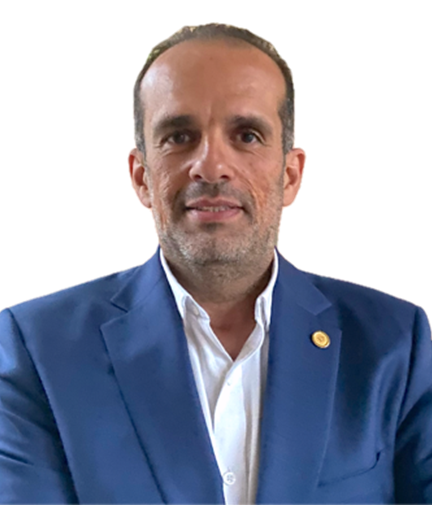
Ghassan AlRegib (F) is currently the John and Marilu McCarty Chair Professor in the School of Electrical and Computer Engineering at the Georgia Institute of Technology. He is the Director of the Center for Signal and Information Processing (CSIP). His group is the Omni Lab for Intelligent Visual Engineering and Science (OLIVES) at Georgia Tech. He served as Director of Georgia Tech’s Center for Energy and Geo Processing (CeGP) (2012 - 2022) and Director of Georgia Tech’s Initiatives and Programs in MENA (2015 - 2018. He is an IEEE Fellow.
Prof. AlRegib received the ECE Outstanding Graduate Teaching Award (2001), both the CSIP Research and the CSIP Service Awards (2003), the ECE Outstanding Junior Faculty Member Award (2008), the Denning Faculty Award for Global Engagement at Georgia Tech (2017), the Distinguished Faculty Achievement Award at the School of Electrical and Computer Engineering at Georgia Tech (2024), and the Georgia Tech’s College of Engineering Outstanding Teacher (Midcareer or Senior) Award (2025 ).
Prof. AlRegib served as the Technical Program co-Chair, International Conference on Image Processing (ICIP) (2020 and 2024); Member, Technical Committees on Multimedia Signal Processing (MMSP) and Image, Video, and Multidimensional Signal Processing (IVMSP) (2015-2017 and 2018-2020); Member, Editorial Boards of both the IEEE Transactions on Image Processing (2009-2020) and the Elsevier Journal Signal Processing: Image Communications (2014-2020). He was an Editorial Board Member of the Wireless Networks Journal (WiNET) (2009-2016) and the IEEE Transactions on Circuits and Systems for Video Technology (CSVT) (2014-2016). He was Area Chair, IEEE International Conference on Multimedia & Expo (ICME) (2016-2017); Tutorial Chair, ICIP 2016; Chair, Special Sessions Program at ICIP 2006; Area Editor, Columns and Forums in the IEEE Signal Processing Magazine (SPM) (2009–2012); Associate Editor, IEEE SPM (2007-2009); Tutorials Co-Chair, ICIP 2009; Guest Editor, IEEE Journal on Special Topics in Signal Processing (J-STSP) (2012); Track Chair, ICME 2011; Co-Chair, IEEE MMTC Interest Group on 3D Rendering, Processing, and Communications (2010-2012); Chair, Speech and Video Processing Track at Asilomar (2012); Technical Program Co-Chair, IEEE Global Conference on Signal and Information Processing (GlobalSIP) (2014); and lead a team that is organizing the IEEE Video and Image Processing (VIP) Cup in 2017 and 2023.
In the Omni Lab for Intelligent Visual Engineering and Science (OLIVES), he and his group work on robust and interpretable machine learning algorithms, uncertainty and trust, multi-modal learning, and human-in-the-loop algorithms. The group has demonstrated their work on a wide range of applications such as Autonomous Systems, Medical Imaging, and Subsurface Imaging.
Lecture Topics
- Inferential Machine Learning: Towards Human-Collaborative Foundation Models
- Ethics, Trust, and Responsible Deployment of Machine Learning
- Robustness in Machine Learning: Explainability, Uncertainty, and Intervenability
- A Foundation Model is Secretly a Signal Processing Pipeline
- From Pixels to Decisions: Image Understanding With Deep Learning
- Datasets Creation: The Good, The Bad, and The Ugly
- Learning AI for All “AI First”
Jingdong Chen
 Jingdong Chen (F) is a Professor and Founding Chair of the Center for Intelligent Acoustics and Immersive Communications (CIAIC) at Northwestern Polytechnical University (NPU), Xi’an, China. He served as Chief Scientist at WeVoice Inc., New Jersey, USA (2009 and 2010), worked as a Member of Technical Staff (MTS) at Bell Labs, Lucent Technologies, New Jersey, USA (2001 to 2009), was a Researcher at the Advanced Telecommunications Research Institute International (ATR), Kyoto, Japan (2000 and 2001), was a Research Fellow at Griffith University, Brisbane, Australia (1999 to 2000), and a Postdoctoral Research Fellow at ATR, Kyoto, Japan (1998 to 1999). Prof. Chen received his Ph.D. degree from the Institute of Automation, Chinese Academy of Sciences, in 1998.
Prof. Chen is an IEEE Fellow, Distinguished Lecturer for the Asia-Pacific Signal and Information Processing Association (APSIPA) (2017 to 2018). His honors include the IEEE Signal Processing Society Best Paper Award (2009), the Best Paper Award at the IEEE Workshop on Applications of Signal Processing to Audio and Acoustics (2011), the Bell Labs Role Model Teamwork Award (2007, 2009), the NASA Tech Brief Award (2009, 2010), the Young Author Best Paper Award at the 5th National Conference on Man-Machine Speech Communications (1998), the Japan Trust International Research Grant from the Japan Key Technology Center (1998), and the Distinguished Young Scientist Fund from the National Natural Science Foundation of China (2014).
Prof. Chen currently serves as Chair, IEEE R10 (North) Membership Development Committee, Chair of the IEEE Xi’an Section, and Chair of the IEEE Xi’an Signal Processing Chapter. He was Associate Editor for the IEEE Transactions on Audio, Speech, and Language Processing (2008 to 2014), Member of the IEEE Signal Processing Society Technical Committee on Audio and Electroacoustics (2007 to 2009), and Member of the Audio and Acoustic Signal Processing Technical Committee (2018 to 2021), General Chair/ Co-Chair and Technical Program Chair/ Co-Chair for more than 30 international conferences.
Prof. Chen’s research interests include microphone array processing, MIMO acoustic signal processing, speech enhancement, adaptive noise and echo control, signal separation, 3D sound acquisition and reproduction, as well as sound event detection, classification, and recognition.
Lecture Topics
- Array Design and Processing for Acoustic and Speech Signal Acquisition and Reproduction
- MIMO Acoustic Signal Processing
- Development and Application of Differential Microphone Arrays
- Audio and Speech Processing for Voice Communication and Human–Machine Speech Interaction
- Acoustic Event Detection and Classification
- Acoustic Signal Acquisition and Sound Field Control in Smart Devices
Alessandro Foi
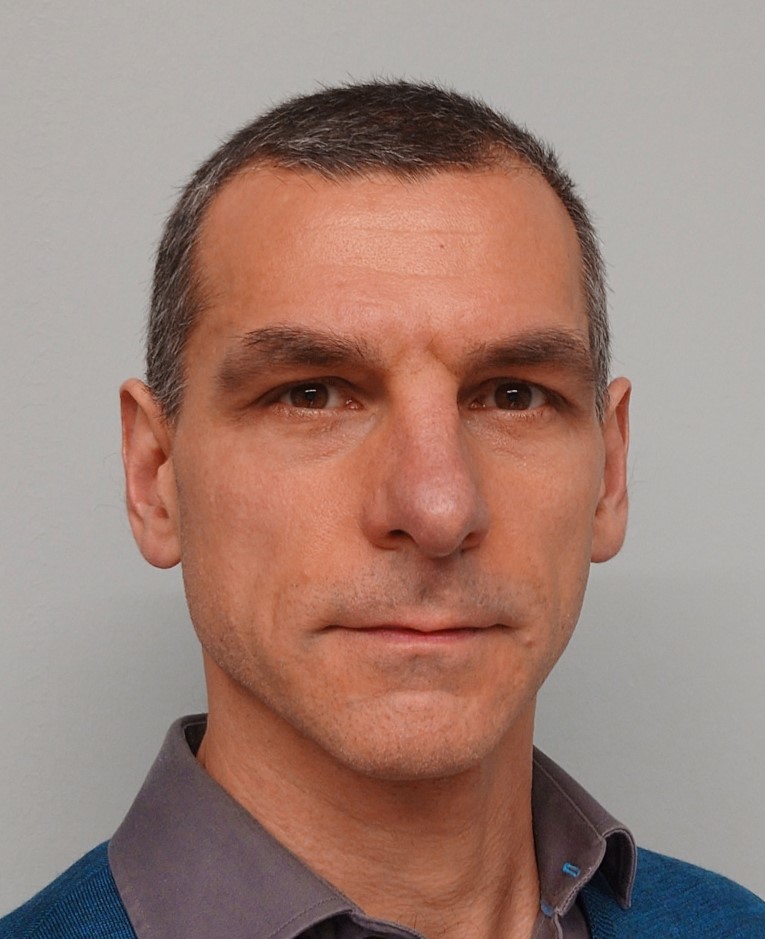 Alessandro Foi (F) is a Professor of Signal Processing at Tampere University (TAU), Finland. He leads the Signal and Image Restoration group and he is the director of TAU Imaging Research Platform. He is also the CTO of Noiseless Imaging, a company specialized in noise-removal, restoration, and enhancement technology for the imaging industry. He received the M.Sc. degree in Mathematics from the Università degli Studi di Milano, Italy, in 2001, the Ph.D. degree in Mathematics from the Politecnico di Milano in 2005, and the D.Sc.Tech. degree in Signal Processing from Tampere University of Technology, Finland, in 2007.
Dr. Foi is an IEEE Fellow for his contributions to image restoration and noise modeling. He was Editor-in-Chief, IEEE Transactions on Image Processing (2021-2023); Senior Area Editor, IEEE Transactions on Computational Imaging (2019-2020); Associate Editor, IEEE Transactions on Image Processing (2012-2016); Associate Editor, IEEE Transactions on Computational Imaging (2014-2018); Associate Editor, SIAM Journal on Imaging Sciences (2017-2020); Member, Image, Video, and Multidimensional Signal Processing Technical Committee (2015-2020) and of the Computational Imaging Technical Committee (2019-2021).
Dr. Foi has presented tutorials at several major international signal processing conferences such as European Signal Processing Conference (EUSIPCO) (2007), International Conference on Image Processing (ICIP) (2010, 2014, 2018), and International Conference on Signal Processing and Communications (SPCOM) (2020), covering a range of topics including noise modeling and analysis, adaptive sparse approximations, image restoration, and inverse imaging. He is Lead Technical Program Chair of ICIP (2026).
Dr. Foi’s research interests include mathematical and statistical methods for signal processing, functional and harmonic analysis, and computational modeling of the human visual system. His work focuses on spatially adaptive algorithms for the restoration and enhancement of digital images, on noise modeling for imaging devices, and on the optimal design of statistical transformations for the stabilization, normalization, and analysis of random data.
Lecture Topics
- Noise In Imaging: Focus on Correlation and Nonlinearity
- Noise Transformations for Modular Imaging Pipelines
Anderson Rocha
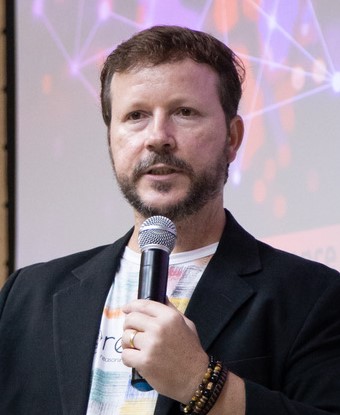 Anderson Rocha (F) is a Full Professor of Artificial Intelligence and Digital Forensics at the Institute of Computing, University of Campinas (Unicamp), Brazil. He is the head of the Artificial Intelligence Lab., Recod.ai, at Unicamp and was the former Director of the Institute for the 2019-2023 term. He holds a bachelor's degree in Computer Science (2003) from Federal University of Lavras, Brazil, a Masters Degree in Computer Science (2006) from Unicamp and a Ph.D. degree in Computer Science (2009) also from Unicamp, Brazil.
Prof. Rocha is an elected affiliate of the Brazilian Academy of Sciences (ABC) and the Brazilian Academy of Forensic Sciences (ABC). He is a three-term elected member of the IEEE Information Forensics and Security Technical Committee (IFS-TC, 2011-2013, 2014-2016, 2023-2026) and a two-term former Chair of such committee (2015-2016, 2025-2026). He is a Microsoft Research (2011) and a Google (2017-2022) Research Faculty Fellow, an IEEE Fellow (2023), and IEEE Biometrics Distinguished Lecturer (2025-2027). In addition, in 2016, he was awarded the Tan Chin Tuan (TCT) Fellowship, and the Asia Pacific Artificial Intelligence Association Fellowship.
Prof. Rocha has been the principal investigator of several research projects in partnership with public funding agencies in Brazil and abroad and national and multi-national companies, having already filed and licensed several patents. He is a Brazilian CNPq research scholar (PQ1C). Finally, he is now a LinkedIn Top Voice in Artificial Intelligence for continuously raising awareness of Al and its potential impacts on society at large.
Lecture Topics
- How to Live With Synthetic Realities: Fighting Disinformation in The Age of AI
- Artificial Intelligence and Wearables For Health and Wellbeing: Proactive Actions
- Artificial Intelligence, Digital Forensics, and Biometrics: A Much-Needed Alliance
- Reasoning For Complex Data Through Self-Supervised Learning and Causality Discovery
- Artificial Intelligence in Engineering: Applications in Gait Recognition, Biometrics, Spoofing and Deepfakes
Junsong Yuan
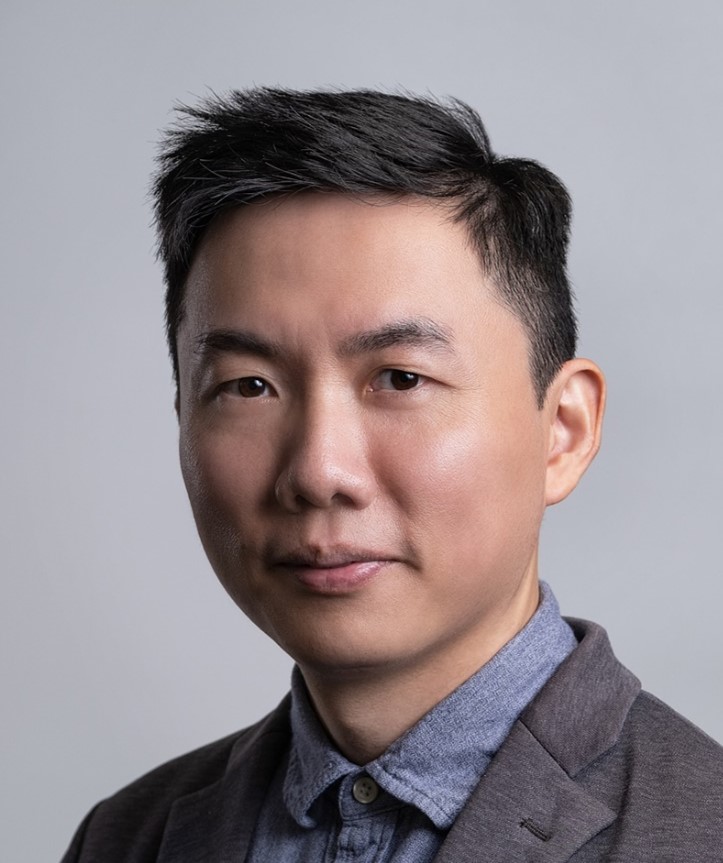 Junsong Yuan (F) is Professor and Director of Visual Computing Lab at Department of Computer Science and Engineering, State University of New York (SUNY) at Buffalo, USA. Before joining SUNY Buffalo, he was Associate Professor (2015-2018) and Nanyang Assistant Professor (2009-2015) at Nanyang Technological University, Singapore. He obtained Ph.D. from Northwestern University (2005-2009), M.Eng. from National University of Singapore (2023-2005), and B.Eng. from Huazhong University of Science Technology (1998-2002).
Dr. Yuan is an IEEE Fellow (2021) and International Association for Pattern Recognition (2018). He is a recipient of SONY Faculty Innovation Award (2024), SUNY Chancellor's Award for Excellence in Scholarship and Creative Activities (2022), IEEE Transactions on Multimedia Best Paper Award (2016), Northwestern Outstanding EECS Ph.D. Thesis award (2010), and Nanyang Assistant Professorship (2009). He serves as Editor-in-Chief for Journal of Visual Communication and Image Representation (2025-present), Senior Editor of IEEE Journal of Selected Topics in Signal Processing (2025-present), Associate Editor of IEEE Transactions on Pattern Analysis and Machine Intelligence (2023-present), IEEE Transactions on Image Processing (2016-2020), IEEE Transactions on Circuits and Systems for Video Technology (2016-2019), Machine Vision and Applications (2020-present), and Computer Vision and Image Understanding (2025-present). He also serves as General Co-chair of IEEE Conference on Multimedia Expo (ICME 2024), Program Co-Chair of IEEE Conference on Acoustics, Speech, and Signal Processing (ICASSP 2027) and IEEE Conference on Multimedia Expo (ICME 2018), and Area Chair for many other conferences.
Lecture Topics
- An Introspective on Statistical Signal Processing in the Age of Generative AI
- Learning Disentangled Representation for Video Generation and Forecasting
- Intelligent Hand Sensing and Augmented Interaction