
July 2026

Volume 43 | Issue 4

Issue Title
July 2026

From Discovery to Deployment: Building Bridges Across the Signal Processing Community [From the Editor]

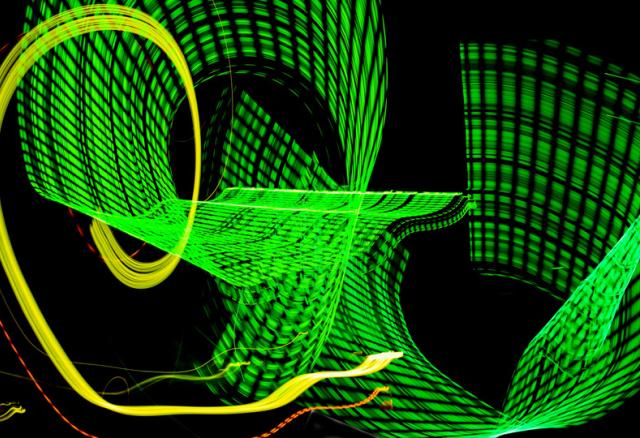
In this issue, alongside a feature article on missing data that inspired the cover, we present several other timely contributions, including our first article in a series highlighting standards activities in our field. This two-part article [A1, A2] describes the technical leadership of the IEEE Signal Processing Society Synthetic Aperture Standards Committee (SPS-SASC) and its working groups in developing standards for the rapidly evolving field of computational imaging and sensing. This marks the first standards initiative led by the IEEE Signal Processing Society in partnership with the IEEE Standards Association.

Read more

The IEEE Signal Processing Society’s Leading Role in Developing Standards for Computational Imaging and Sensing: Part II [SP Applications]

In every imaging or sensing application, the physical hardware creates constraints that must be overcome or they will limit system performance. Techniques that leverage additional degrees of freedom can effectively extend performance beyond the inherent physical capabilities of the hardware. As these technologies mature beyond the conceptual and prototype phase they will ultimately transition to the commercial market. Here, standards play a critical role in ensuring success.

Read more

The IEEE Signal Processing Society’s Leading Role in Developing Standards for Computational Imaging and Sensing: Part I [SP Applications]

The practicality gap between theoretical concepts, or even lab prototypes, and commercially viable products is quite often a bridge too far. The root causes for such shortcomings may simply be that a new technology is not well suited for real-world environments or economic variables, such as cost, may be to blame. A limiting factor often overlooked in technology transfer programs is a lack of high-quality, accessible technical standards that are also definitive and relevant. Standards are essential for driving high-technology products to market that are reasonably priced for the consumer.

Read more

Missing Data in Signal Processing and Machine Learning: Models, methods, and modern approaches

The goal of this paper is to provide an overview of recent methods for handling missing data in signal processing methods, from their origins to the challenges ahead. Missing data approaches are grouped by three main categories: i) missing-data imputation, ii) estimation with missing values and iii) prediction with missing values. We focus on methodological and experimental results through specific case studies on real-world applications. Promising and future research directions, including a better integration of informative missingness, are also discussed.

Read more