May
22

Date: 22-May-2026
Time: 12:00 PM ET (New York Time)
Duration: Approximately 60 minutes
Presenter: Dr. Matthew Stamm
Moderator: Dr. Amit Roy Chowdhury
Abstract
AI-generated images have become so realistic that they can be extremely difficult to detect with the human eye. To combat this, synthetic image detectors have been developed to identify forensic traces left by image generators, similar to fingerprints left at a crime scene. A key challenge remains, however, as most existing detectors require supervised training to learn the traces associated with each known generator. This is unrealistic given the rapid pace at which generative AI systems continue to evolve.
In this talk, Dr. Matthew Stamm will discuss how AI-generated synthetic media can be detected in a rapidly changing environment. By leveraging self-supervised learning, we have developed zero-shot detectors capable of identifying synthetic images without requiring training data from any specific image generator. Furthermore, we have developed an autonomous synthetic image detection system that can discover the emergence of new generators, curate training data, and self-adapt without requiring human intervention.
Biography
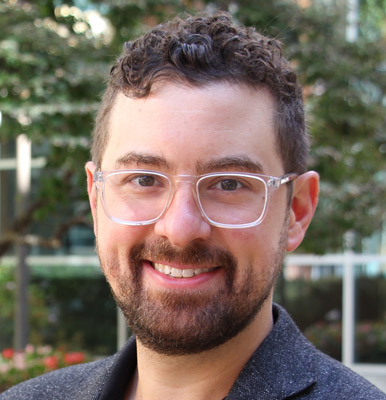
Matthew Stamm (M’12) received the B.S., M.S., and Ph.D. degrees in electrical engineering from the University of Maryland, College Park, MD, USA, in 2004, 2011, and 2012, respectively.
He is currently a Professor in the Department of Electrical and Computer Engineering and an Affiliate Professor in the Department of Computer Science at Drexel University, Philadelphia, PA, USA. Previously, he served as an Assistant Professor beginning in 2013 and as an Associate Professor beginning in 2019 at Drexel University.
Dr. Stamm a member of the Association for Computing Machinery (ACM). His awards include the Alumni Excellence for Research Award from the University of Maryland (2023), being named one of Popular Science’s “Brilliant 10” (2021), and a National Science Foundation CAREER Award (2016). He has served as an elected member of the Information Forensics and Security Technical Committee of the IEEE Signal Processing Society, as an Associate Editor for IEEE Transactions on Multimedia, and as the Lead Organizer (2018) and Co-Organizer (2022) of the IEEE Signal Processing Cup Competition.
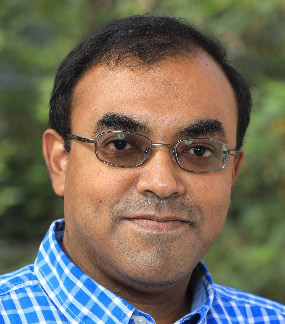
Amit Roy-Chowdhury received the Ph.D. degree in electrical and computer engineering from the University of Maryland, College Park, MD, USA, in 2002.
He is currently a Professor of Electrical and Computer Engineering and the Co-Director of the Riverside AI Research and Education Institute at the University of California, Riverside, CA, USA. He also serves as a Cooperating Faculty member in Computer Science and Engineering and leads the Video Computing Group at UCR. His current and previous research interests include the foundational principles of computer vision, image processing, and machine learning, with applications in cyber-physical, autonomous, and intelligent systems. He has published over 250 papers in leading conferences and journals in his area, as well as two monographs: Camera Networks: The Acquisition and Analysis of Videos Over Wide Areas, Morgan & Claypool Publishers, 2012, and Person Re-identification with Limited Supervision, Morgan & Claypool Publishers, 2021.
Dr. Roy-Chowdhury a Fellow of the IEEE and International Association for Pattern Recognition (IAPR). He serves on the editorial boards of major journals, including until recently as a Senior Associate Editor for IEEE Transactions on Image Processing. His awards include the Doctoral Dissertation Advising/Mentoring Award from UCR and the ECE Distinguished Alumni Award from the University of Maryland.