Jun
10

Date: 10-June-2026
Time: 7:30 AM ET (New York Time)
Presenter: Dr. Wen Zhang & Dr. Dongyuan Shi
Abstract
This presentation addresses multi-channel sound field control — a foundational acoustic technology that shapes spatial sound distributions using transducer arrays to enable customized, region-specific auditory mapulation. The presenters trace the technological evolution of multi-channel control frameworks across two key application domains: Personal Sound Zones (PSZ) and Active Noise Control (ANC).
In the PSZ domain, they chart the progression from classical optimization strategies — including Acoustic Contrast Control (ACC) and Pressure Matching (PM) — to advanced robust formulations such as Robust Pressure Matching (RPM), which explicitly accounts for system uncertainty and real-world acoustic variability. Building on these foundations, AI-driven paradigms are shown to substantially enhance PSZ systems, enabling dynamic adaptation and robust performance under challenging, time-varying conditions.
In the ANC domain, multi-channel architectures are presented as a means to overcome the inherent limitations of single-channel noise cancellation. While conventional adaptive algorithms such as FxLMS remain sensitive to non-stationary noise environments, deep learning-based ANC approaches face a fundamental latency-performance trade-off. To address these challenges, they introduce a set of innovative multi-channel frameworks: a Dual-Rate System for computational efficiency, Selective Fixed-filter ANC (SFANC) for rapid environmental adaptation, and Generative Filter ANC (GFANC) for real-time filter synthesis. Finally, they demonstrate how unsupervised and reinforcement learning endow multi-channel ANC systems with autonomous optimization and continuous self-evolution capabilities.
Biography

Wen Zhang (M’10) received the B.E. degree in telecommunication engineering from Xidian University, Xi’an, China, the M.E. (with Honors) and Ph.D. degrees from the Australian National University (ANU), Canberra, ACT, Australia, in 2003, 2005 and 2010, respectively.
She is currently a Professor with the Center of Intelligent Acoustics and Immersive Communications, School of Artificial Intelligence, Northwestern Polytechnical University, Xi’an, China. From 2010 to 2012, she was a Postdoctoral Fellow at the Commonwealth Scientific and Industrial Research Organisation (CSIRO), Sydney, NSW, Australia. Between 2012 and 2017, she held research fellow positions at ANU. Her research interests cover acoustic signal processing, spatial audio, and active noise control.
Dr. Zhang was awarded the Discovery Early Career Researcher Award (DECRA) Fellowship by the Australian Research Council (ARC) in 2015. She serves as an Associate Editor for IEEE Signal Processing Letters and the Journal of the Engineering Society. Additionally, she is a Member of the IEEE Audio and Acoustic Signal Processing Technical Committee (AASP TC), IEEE Signal Processing Society. She also serves on the IEEE Region 10 Humanitarian Technology Activities (HTA) Committee (2025–2026) and was conferred the IEEE R10 HTA 2025 Certificate of Appreciation.
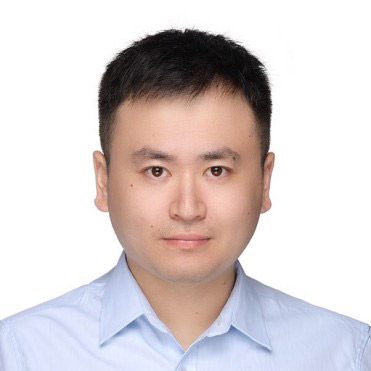
Dongyuan Shi (M’19) received the B.E. degree in electronic information engineering and the M.E. degree in signal and information processing from the University of Electronic Science and Technology of China (UESTC), Chengdu, China, and the Ph.D. degree in signal processing from Nanyang Technological University (NTU), Singapore, in 2010, 2013 and 2020 respectively.
He is currently a Professor with the School of Artificial Intelligence, Northwestern Polytechnical University, Xi’an, China. From April 2020 to September 2024, he was a Research Assistant Professor with the School of Electrical and Electronic Engineering, Nanyang Technological University, Singapore. From October 2024 to April 2026, he was a Professor with the School of Marine Science and Technology, Northwestern Polytechnical University (NWPU), Xi’an, China. His research interests include advanced active noise control, deep learning, digital signal processing, adaptive array processing, and high-speed real-time digital system implementation.
Dr. Shi’s work has been published in leading journals, including the Journal of the Acoustical Society of America (JASA), IEEE/ACM Transactions on Audio, Speech, and Language Processing (TASLP), IEEE Transactions on Very Large Scale Integration (VLSI) Systems, Signal Processing, IEEE Signal Processing Letters (SPL), and Mechanical Systems and Signal Processing (MSSP), as well as in major conference proceedings such as the IEEE International Conference on Acoustics, Speech, and Signal Processing (ICASSP). He serves as an Associate Editor for IEICE Transactions on Fundamentals of Electronics, Communications and Computer Sciences and as Lead Guest Editor for Applied Sciences. He was an APSIPA Distinguished Lecturer for 2024–2025 and received the National Instruments Research Award in 2018.