Jun
15

Date: 15-June-2026
Time: 11:00 AM ET (New York Time)
Duration: Approximately 90 minutes
Presenter: Dr. Jeff Fessler
Abstract
Diffusion models can learn strong image priors and use them to solve inverse problems. However, standard methods come with many challenges in medical and scientific applications: they are computationally expensive (especially for 3D imaging), they require lots of training data, and they may not be robust to distribution shifts between the training data and the test data.
This talk will describe methods for tackling these challenges, focusing on medical imaging inverse problems like MRI and low-dose X-ray CT image reconstruction. Work with Jason Hu, Bowen Song, Xiaojian Xu and Liyue Shen.
Biography
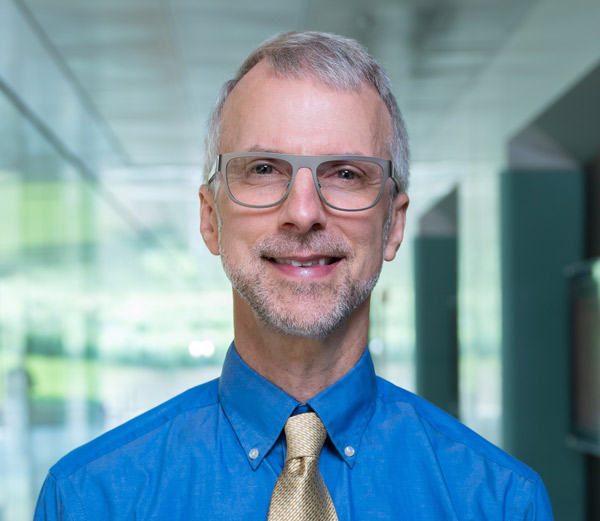
Jeff Fessler (F’06) received the B.S. degree from Purdue University and the M.S. degree from Stanford University, both in electrical engineering; the M.S. degree in statistics and the Ph.D. degree in electrical engineering from Stanford University in 1985, 1986, 1989 and 1990 respectively.
He is currently a Professor in the Departments of Electrical Engineering and Computer Science, Radiology, and Biomedical Engineering at the University of Michigan since 1990. From 1991 to 1992 he was a Department of Energy Alexander Hollaender Post-Doctoral Fellow in the Division of Nuclear Medicine. From 1993 to 1995 he was an Assistant Professor in Nuclear Medicine and the Bioengineering Program.
Dr. Fessler received the Francois Erbsmann award for his IPMI93 presentation, the Edward Hoffman Medical Imaging Scientist Award in 2013, and an IEEE EMBS Technical Achievement Award in 2016. He has served as an associate editor for the IEEE Transactions on Medical Imaging, the IEEE Signal Processing Letters, the IEEE Transactions on Image Processing, the IEEE Transactions on Computational Imaging, the SIAM J. on Imaging Science, and as a Senior AE for IEEE Transactions on Computational Imaging. He has chaired the IEEE T-MI Steering Committee and the ISBI Steering Committee. He was co-chair of the 1997 SPIE conference on Image Reconstruction and Restoration, technical program co-chair of the 2002 IEEE International Symposium on Biomedical Imaging (ISBI), and general chair of ISBI 2007. He received the 2023 Steven S. Attwood Award, the highest honor awarded to a faculty member by the College of Engineering. His research interests are in statistical aspects of imaging problems, and he has supervised doctoral research in PET, SPECT, X-ray CT, MRI, and optical imaging problems.