Empirical Wavelets

We design a data-driven wavelet transform, called the empirical wavelet transform, which permits to extract very accurate time-frequency information from signals, or features from images.
Facial Expression Analysis with Attention Mechanism
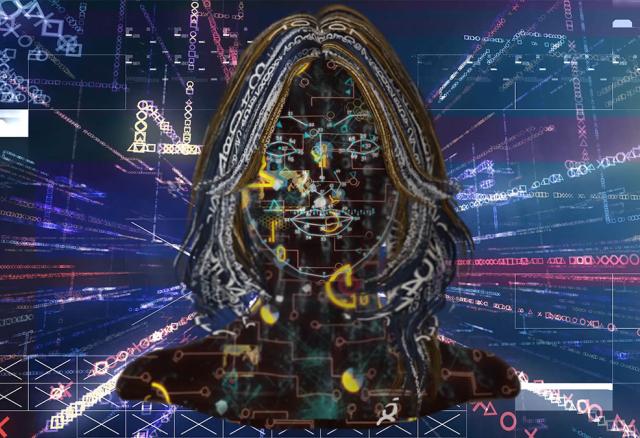
We develop algorithms to analyzing facial expression by learning from the data. Since local characters of muscle movements play an important role in distinguishing facial expression by machines, we explore the local characters of facial expressions by introducing the attention mechanism in both supervised and self-supervised supervised manners. Our methods is experimentally shown to be effective on facial expression recognition with occlusions and facial action unit detection.
When Quantum Signal Processing and Communications Meet
Quantum search algorithms are capable of efficiently solving large-scale quantum computing and signal processing problems, but their operation is contaminated by the decoherence of quantum circuits. This may be mitigated by quantum codes. Secure QKD is already a commercial reality in 2021.
Learning the MMSE Channel Estimator

Accurate channel estimation is a major challenge in the next generation of wireless communication networks. To fully exploit setups with many antennas, estimation errors must be kept small. This can be achieved by exploiting the structure inherent in the channel vectors. For example, line-of-sight paths result in highly correlated channel coefficients.
Graph Neural Networks
Filtering is the fundamental operation upon which the field of signal processing is built. Loosely speaking, filtering is a mapping between signals, typically used to extract useful information (output signal) from data (input signal). Arguably, the most popular type of filter is the linear and shift-invariant (i.e. independent of the starting point of the signal) filter, which can be computed efficiently by leveraging the convolution operation.
Hybrid Beamforming for 5G Millimeter-Wave Systems

The upcoming 5G network needs to achieve substantially larger link capacity and ultra-low latency to support emerging mobile applications. While conventional techniques have reached their limits, uplifting the carrier frequency to the millimeter-wave (mm-wave) band stands out as an effective approach to further boost the network capacity, as it provides orders of magnitude greater spectrum than current cellular bands.
How to Realize Data Sharing With Sensitive Information Hiding in Remote Data Integrity Auditing

With the explosive growth of data, it is a heavy burden for users to store the sheer amount of data locally. Therefore, more and more organizations and individuals would like to store their data in the cloud. However, the data stored in the cloud might be corrupted or lost due to the inevitable software bugs, hardware faults and human errors in the cloud.
Adaptive Importance Sampling: The Past, the Present, and the Future
Monte Carlo (MC) methods are a set of fascinating computational techniques that have attracted ever-increasing attention in the last decades. They are based on the simulation of random samples that are used for diverse purposes, such as numerical integration or optimization.
Deep Learning on Graphs: History, Successes, Challenges, and Next Steps
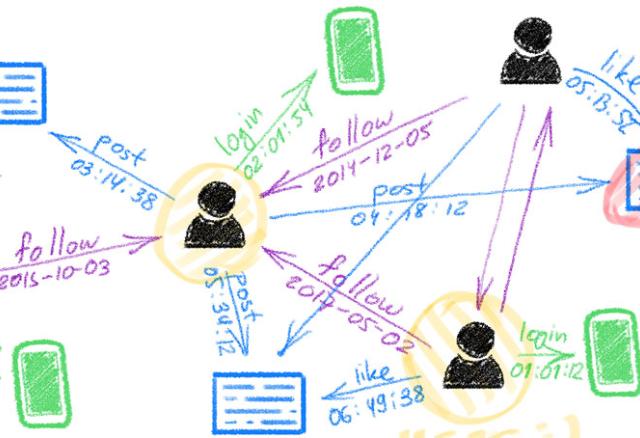
Deep learning on graphs, also known as Geometric deep learning (GDL) [1], Graph representation learning (GRL), or relational inductive biases, has recently become one of the hottest topics in machine learning. While early works on graph learning go back at least a decade [2], if not two [3], it is undoubtedly the past few years’ progress that has taken these methods from a niche into the spotlight of the Machine Learning (ML) community.
Artificial Intelligence in Radio Frequencies

Artificial intelligence (AI) and machine learning (ML) as an application of AI, has today become an inevitable part of major industries such as healthcare, financial trending, and transportation. Future urgent need to intelligently utilize wireless resources to meet the need of ever-increasing diversity in services and user behavior, has actuated the wireless communication industry to deploy AI and ML techniques.
IEEE Signal Processing Society on 

@ieeeSPS
13.5K+ subscribers‧250+ videos