Apr
03

Date: 03-April-2026
Time: 7:30 AM ET (New York Time)
Presenter: Dr. Jingdong Chen
Abstract
Voice communication and human-machine interaction systems depend critically on acoustic signal acquisition and processing technologies. These encompass sound sensing and acquisition, signal extraction and enhancement, event detection and recognition, semantic understanding, and sound field control and reconstruction. Among these stages, sensing and acquisition constitute the foundation of the entire processing pipeline. This involves the design and selection of microphone sensors, the configuration and optimization of array geometries, and the development of multichannel and array-based signal processing algorithms.
In this talk, our presenter will provide an overview of the fundamental principles underlying acoustic signal acquisition and processing, together with recent advances in the field. He will then discuss key challenges currently confronting the community and present an illustrative example demonstrating how one-dimensional or two-dimensional microphone arrays can be designed to approximate the performance and functionality of carefully engineered three-dimensional volumetric arrays.
Biography
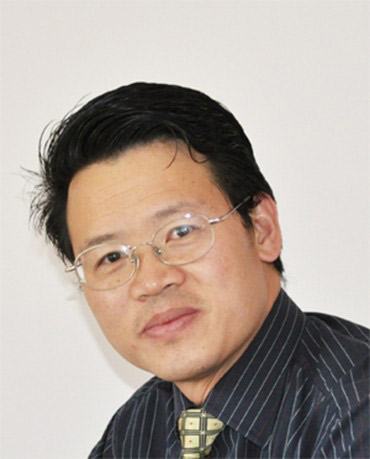
Jingdong Chen received the Ph.D. degree in pattern recognition and intelligent control from the Chinese Academy of Sciences, Beijing, China, in 1998
He is currently a Professor at Northwestern Polytechnical University, Xi’an, China. From 1998 to 1999, he was with ATR Interpreting Telecommunications Research Laboratories, Kyoto, Japan, where he conducted research on speech synthesis, speech analysis, and objective evaluation methods for speech synthesis. He then joined Griffith University, Brisbane, Australia, engaging in research on robust speech recognition. From 2000 to 2001, he worked at ATR Spoken Language Translation Research Laboratories on robust speech recognition and speech enhancement. From 2001 to 2009, he was a Member of Technical Staff at Bell Laboratories, Murray Hill, New Jersey, focusing on acoustic signal processing for voice communications. He subsequently joined WeVoice Inc., New Jersey, as Chief Scientist. His research interests include acoustic signal processing, array signal processing, pattern recognition, and artificial intelligence.
Dr. Chen has held numerous leadership roles in the global research community, including Chair of the IEEE Region 10 Membership Development Committee (North), Chair of the IEEE Xi’an Section, and Chair of the IEEE Xi’an Signal Processing Chapter. He is currently serving as a Distinguished Lecturer of the IEEE Signal Processing Society. He has also served as an Associate Editor for the IEEE Transactions on Audio, Speech, and Language Processing and as a member of the editorial boards of several other journals. In addition, he has served as General Chair or Technical Program Chair for more than two dozen international conferences. He has co-authored 16 monographs, co-edited two books, and published more than 300 journal and conference papers. He holds over 80 patents. His honors include the 2008 Best Paper Award from the IEEE Signal Processing Society; the Best Paper Award at the IEEE Workshop on Applications of Signal Processing to Audio and Acoustics (2011); the Bell Labs Role Model Teamwork Award (2007 and 2009); the NASA Tech Brief Award (2009 and 2010); and the Young Author Best Paper Award at the 5th National Conference on Man-Machine Speech Communications (1998). He is also a co-author of a paper for which his student received the IEEE Region 10 Distinguished Student Paper Award (First Prize) in 2016. He received the Japan Trust International Research Grant from the Japan Key Technology Center in 1998 and the Distinguished Young Scientists Fund from the National Natural Science Foundation of China in 2014. He was elevated to IEEE Fellow in 2021 for his contributions to microphone array processing and speech enhancement.