Artificial Intelligence

From the Guest Editors: Artificial Intelligence for Education: A Signal Processing Perspective: Part II: From Human–AI Cocreativity to Educational Equity

Signal processing (SP) is at the heart of our digital lives and has served as an enabling technology across multiple disciplines, from the…
Read moreDeploying AI for Signal Processing Education: Selected Challenges and Intriguing Opportunities
Abstract: Powerful artificial intelligence (AI) tools that have emerged in recent years—including large language models (LLMs), automated coding…
Read moreCall for Nominations: Editor-in-Chief IEEE Transactions on Artificial Intelligence

The IEEE Computational Intelligence Society; IEEE Computer Society; IEEE Systems, Man, and Cybernetics Society; IEEE Signal Processing Society; and IEEE Robotics Society seek nominations for the position of Editor-in-Chief-Elect of IEEE Transactions on Artificial Intelligence (IEEE TAI) from July 2024, to commence from 1st of January 2025 a two-year term as the Editor-in-Chief.
Deep Learning on Graphs: History, Successes, Challenges, and Next Steps
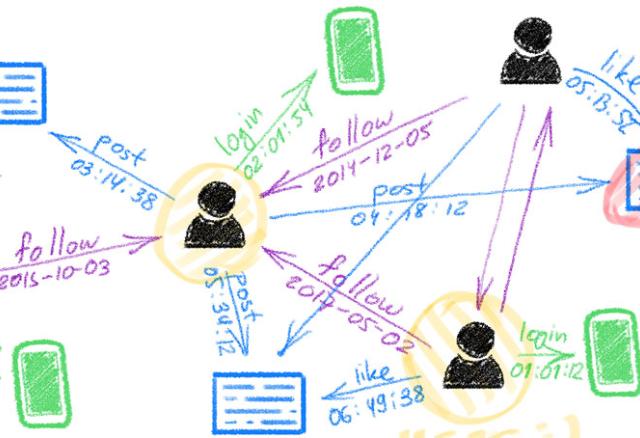
Deep learning on graphs, also known as Geometric deep learning (GDL) [1], Graph representation learning (GRL), or relational inductive biases, has recently become one of the hottest topics in machine learning. While early works on graph learning go back at least a decade [2], if not two [3], it is undoubtedly the past few years’ progress that has taken these methods from a niche into the spotlight of the Machine Learning (ML) community.
Artificial Intelligence in Radio Frequencies

Artificial intelligence (AI) and machine learning (ML) as an application of AI, has today become an inevitable part of major industries such as healthcare, financial trending, and transportation. Future urgent need to intelligently utilize wireless resources to meet the need of ever-increasing diversity in services and user behavior, has actuated the wireless communication industry to deploy AI and ML techniques.
IEEE JSTSP Special Issue on Data Science: Machine Learning for Audio Signal Processing

Manuscript Due: October 1, 2018 Publication Date: May 2019 CFP Document
Read moreIEEE Signal Processing Society on 

@ieeeSPS
13.5K+ subscribers‧250+ videos