The following is a list of Signal Processing Society's distinguished lecturers.

2026 Distinguished Lecturers
Ghassan AlRegib
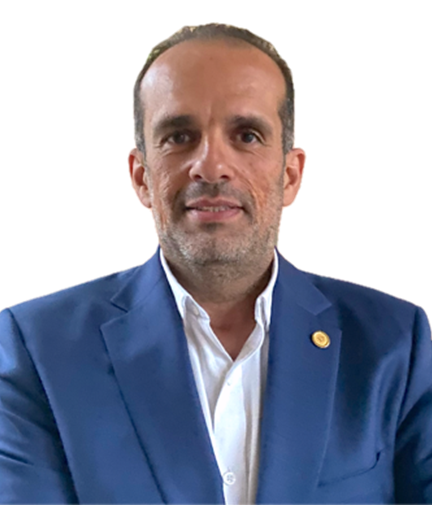
Ghassan AlRegib (F) is currently the John and Marilu McCarty Chair Professor in the School of Electrical and Computer Engineering at the Georgia Institute of Technology. He is the Director of the Center for Signal and Information Processing (CSIP). His group is the Omni Lab for Intelligent Visual Engineering and Science (OLIVES) at Georgia Tech. He served as Director of Georgia Tech’s Center for Energy and Geo Processing (CeGP) (2012 - 2022) and Director of Georgia Tech’s Initiatives and Programs in MENA (2015 - 2018. He is an IEEE Fellow.
Prof. AlRegib received the ECE Outstanding Graduate Teaching Award (2001), both the CSIP Research and the CSIP Service Awards (2003), the ECE Outstanding Junior Faculty Member Award (2008), the Denning Faculty Award for Global Engagement at Georgia Tech (2017), the Distinguished Faculty Achievement Award at the School of Electrical and Computer Engineering at Georgia Tech (2024), and the Georgia Tech’s College of Engineering Outstanding Teacher (Midcareer or Senior) Award (2025 ).
Prof. AlRegib served as the Technical Program co-Chair, International Conference on Image Processing (ICIP) (2020 and 2024); Member, Technical Committees on Multimedia Signal Processing (MMSP) and Image, Video, and Multidimensional Signal Processing (IVMSP) (2015-2017 and 2018-2020); Member, Editorial Boards of both the IEEE Transactions on Image Processing (2009-2020) and the Elsevier Journal Signal Processing: Image Communications (2014-2020). He was an Editorial Board Member of the Wireless Networks Journal (WiNET) (2009-2016) and the IEEE Transactions on Circuits and Systems for Video Technology (CSVT) (2014-2016). He was Area Chair, IEEE International Conference on Multimedia & Expo (ICME) (2016-2017); Tutorial Chair, ICIP 2016; Chair, Special Sessions Program at ICIP 2006; Area Editor, Columns and Forums in the IEEE Signal Processing Magazine (SPM) (2009–2012); Associate Editor, IEEE SPM (2007-2009); Tutorials Co-Chair, ICIP 2009; Guest Editor, IEEE Journal on Special Topics in Signal Processing (J-STSP) (2012); Track Chair, ICME 2011; Co-Chair, IEEE MMTC Interest Group on 3D Rendering, Processing, and Communications (2010-2012); Chair, Speech and Video Processing Track at Asilomar (2012); Technical Program Co-Chair, IEEE Global Conference on Signal and Information Processing (GlobalSIP) (2014); and lead a team that is organizing the IEEE Video and Image Processing (VIP) Cup in 2017 and 2023.
In the Omni Lab for Intelligent Visual Engineering and Science (OLIVES), he and his group work on robust and interpretable machine learning algorithms, uncertainty and trust, multi-modal learning, and human-in-the-loop algorithms. The group has demonstrated their work on a wide range of applications such as Autonomous Systems, Medical Imaging, and Subsurface Imaging.
Lecture Topics
- Inferential Machine Learning: Towards Human-Collaborative Foundation Models
- Ethics, Trust, and Responsible Deployment of Machine Learning
- Robustness in Machine Learning: Explainability, Uncertainty, and Intervenability
- A Foundation Model is Secretly a Signal Processing Pipeline
- From Pixels to Decisions: Image Understanding With Deep Learning
- Datasets Creation: The Good, The Bad, and The Ugly
- Learning AI for All “AI First”
Jingdong Chen
 Jingdong Chen (F) is a Professor and Founding Chair of the Center for Intelligent Acoustics and Immersive Communications (CIAIC) at Northwestern Polytechnical University (NPU), Xi’an, China. He served as Chief Scientist at WeVoice Inc., New Jersey, USA (2009 and 2010), worked as a Member of Technical Staff (MTS) at Bell Labs, Lucent Technologies, New Jersey, USA (2001 to 2009), was a Researcher at the Advanced Telecommunications Research Institute International (ATR), Kyoto, Japan (2000 and 2001), was a Research Fellow at Griffith University, Brisbane, Australia (1999 to 2000), and a Postdoctoral Research Fellow at ATR, Kyoto, Japan (1998 to 1999). Prof. Chen received his Ph.D. degree from the Institute of Automation, Chinese Academy of Sciences, in 1998.
Prof. Chen is an IEEE Fellow, Distinguished Lecturer for the Asia-Pacific Signal and Information Processing Association (APSIPA) (2017 to 2018). His honors include the IEEE Signal Processing Society Best Paper Award (2009), the Best Paper Award at the IEEE Workshop on Applications of Signal Processing to Audio and Acoustics (2011), the Bell Labs Role Model Teamwork Award (2007, 2009), the NASA Tech Brief Award (2009, 2010), the Young Author Best Paper Award at the 5th National Conference on Man-Machine Speech Communications (1998), the Japan Trust International Research Grant from the Japan Key Technology Center (1998), and the Distinguished Young Scientist Fund from the National Natural Science Foundation of China (2014).
Prof. Chen currently serves as Chair, IEEE R10 (North) Membership Development Committee, Chair of the IEEE Xi’an Section, and Chair of the IEEE Xi’an Signal Processing Chapter. He was Associate Editor for the IEEE Transactions on Audio, Speech, and Language Processing (2008 to 2014), Member of the IEEE Signal Processing Society Technical Committee on Audio and Electroacoustics (2007 to 2009), and Member of the Audio and Acoustic Signal Processing Technical Committee (2018 to 2021), General Chair/ Co-Chair and Technical Program Chair/ Co-Chair for more than 30 international conferences.
Prof. Chen’s research interests include microphone array processing, MIMO acoustic signal processing, speech enhancement, adaptive noise and echo control, signal separation, 3D sound acquisition and reproduction, as well as sound event detection, classification, and recognition.
Lecture Topics
- Array Design and Processing for Acoustic and Speech Signal Acquisition and Reproduction
- MIMO Acoustic Signal Processing
- Development and Application of Differential Microphone Arrays
- Audio and Speech Processing for Voice Communication and Human–Machine Speech Interaction
- Acoustic Event Detection and Classification
- Acoustic Signal Acquisition and Sound Field Control in Smart Devices
Alessandro Foi
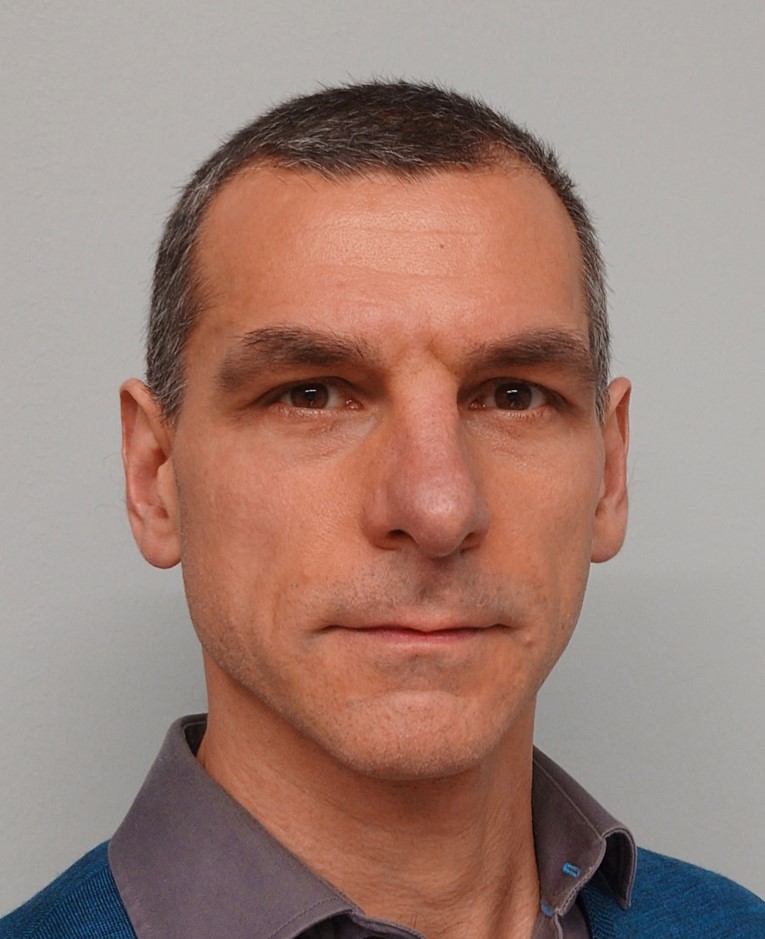 Alessandro Foi (F) is a Professor of Signal Processing at Tampere University (TAU), Finland. He leads the Signal and Image Restoration group and he is the director of TAU Imaging Research Platform. He is also the CTO of Noiseless Imaging, a company specialized in noise-removal, restoration, and enhancement technology for the imaging industry. He received the M.Sc. degree in Mathematics from the Università degli Studi di Milano, Italy, in 2001, the Ph.D. degree in Mathematics from the Politecnico di Milano in 2005, and the D.Sc.Tech. degree in Signal Processing from Tampere University of Technology, Finland, in 2007.
Dr. Foi is an IEEE Fellow for his contributions to image restoration and noise modeling. He was Editor-in-Chief, IEEE Transactions on Image Processing (2021-2023); Senior Area Editor, IEEE Transactions on Computational Imaging (2019-2020); Associate Editor, IEEE Transactions on Image Processing (2012-2016); Associate Editor, IEEE Transactions on Computational Imaging (2014-2018); Associate Editor, SIAM Journal on Imaging Sciences (2017-2020); Member, Image, Video, and Multidimensional Signal Processing Technical Committee (2015-2020) and of the Computational Imaging Technical Committee (2019-2021).
Dr. Foi has presented tutorials at several major international signal processing conferences such as European Signal Processing Conference (EUSIPCO) (2007), International Conference on Image Processing (ICIP) (2010, 2014, 2018), and International Conference on Signal Processing and Communications (SPCOM) (2020), covering a range of topics including noise modeling and analysis, adaptive sparse approximations, image restoration, and inverse imaging. He is Lead Technical Program Chair of ICIP (2026).
Dr. Foi’s research interests include mathematical and statistical methods for signal processing, functional and harmonic analysis, and computational modeling of the human visual system. His work focuses on spatially adaptive algorithms for the restoration and enhancement of digital images, on noise modeling for imaging devices, and on the optimal design of statistical transformations for the stabilization, normalization, and analysis of random data.
Lecture Topics
- Noise In Imaging: Focus on Correlation and Nonlinearity
- Noise Transformations for Modular Imaging Pipelines
Anderson Rocha
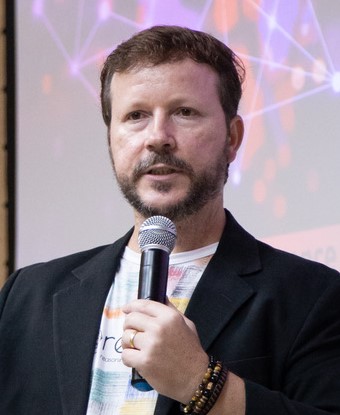 Anderson Rocha (F) is a Full Professor of Artificial Intelligence and Digital Forensics at the Institute of Computing, University of Campinas (Unicamp), Brazil. He is the head of the Artificial Intelligence Lab., Recod.ai, at Unicamp and was the former Director of the Institute for the 2019-2023 term. He holds a bachelor's degree in Computer Science (2003) from Federal University of Lavras, Brazil, a Masters Degree in Computer Science (2006) from Unicamp and a Ph.D. degree in Computer Science (2009) also from Unicamp, Brazil.
Prof. Rocha is an elected affiliate of the Brazilian Academy of Sciences (ABC) and the Brazilian Academy of Forensic Sciences (ABC). He is a three-term elected member of the IEEE Information Forensics and Security Technical Committee (IFS-TC, 2011-2013, 2014-2016, 2023-2026) and a two-term former Chair of such committee (2015-2016, 2025-2026). He is a Microsoft Research (2011) and a Google (2017-2022) Research Faculty Fellow, an IEEE Fellow (2023), and IEEE Biometrics Distinguished Lecturer (2025-2027). In addition, in 2016, he was awarded the Tan Chin Tuan (TCT) Fellowship, and the Asia Pacific Artificial Intelligence Association Fellowship.
Prof. Rocha has been the principal investigator of several research projects in partnership with public funding agencies in Brazil and abroad and national and multi-national companies, having already filed and licensed several patents. He is a Brazilian CNPq research scholar (PQ1C). Finally, he is now a LinkedIn Top Voice in Artificial Intelligence for continuously raising awareness of Al and its potential impacts on society at large.
Lecture Topics
- How to Live With Synthetic Realities: Fighting Disinformation in The Age of AI
- Artificial Intelligence and Wearables For Health and Wellbeing: Proactive Actions
- Artificial Intelligence, Digital Forensics, and Biometrics: A Much-Needed Alliance
- Reasoning For Complex Data Through Self-Supervised Learning and Causality Discovery
- Artificial Intelligence in Engineering: Applications in Gait Recognition, Biometrics, Spoofing and Deepfakes
Junsong Yuan
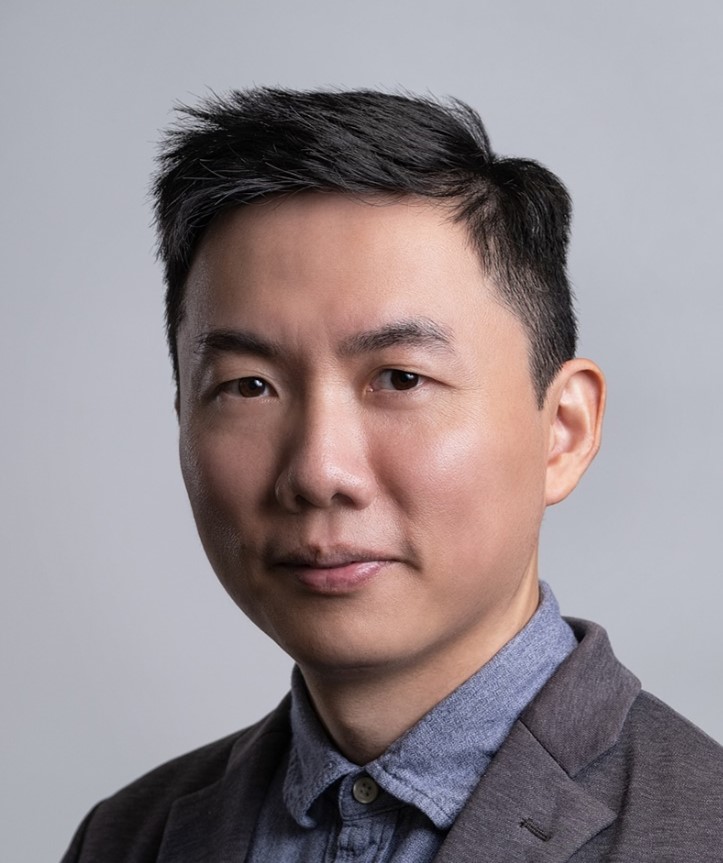 Junsong Yuan (F) is Professor and Director of Visual Computing Lab at Department of Computer Science and Engineering, State University of New York (SUNY) at Buffalo, USA. Before joining SUNY Buffalo, he was Associate Professor (2015-2018) and Nanyang Assistant Professor (2009-2015) at Nanyang Technological University, Singapore. He obtained Ph.D. from Northwestern University (2005-2009), M.Eng. from National University of Singapore (2023-2005), and B.Eng. from Huazhong University of Science Technology (1998-2002).
Dr. Yuan is an IEEE Fellow (2021) and International Association for Pattern Recognition (2018). He is a recipient of SONY Faculty Innovation Award (2024), SUNY Chancellor's Award for Excellence in Scholarship and Creative Activities (2022), IEEE Transactions on Multimedia Best Paper Award (2016), Northwestern Outstanding EECS Ph.D. Thesis award (2010), and Nanyang Assistant Professorship (2009). He serves as Editor-in-Chief for Journal of Visual Communication and Image Representation (2025-present), Senior Editor of IEEE Journal of Selected Topics in Signal Processing (2025-present), Associate Editor of IEEE Transactions on Pattern Analysis and Machine Intelligence (2023-present), IEEE Transactions on Image Processing (2016-2020), IEEE Transactions on Circuits and Systems for Video Technology (2016-2019), Machine Vision and Applications (2020-present), and Computer Vision and Image Understanding (2025-present). He also serves as General Co-chair of IEEE Conference on Multimedia Expo (ICME 2024), Program Co-Chair of IEEE Conference on Acoustics, Speech, and Signal Processing (ICASSP 2027) and IEEE Conference on Multimedia Expo (ICME 2018), and Area Chair for many other conferences.
Lecture Topics
- An Introspective on Statistical Signal Processing in the Age of Generative AI
- Learning Disentangled Representation for Video Generation and Forecasting
- Intelligent Hand Sensing and Augmented Interaction
2025 Distinguished Lecturers
Patrice Abry

Patrice Abry (F) was born in Bourg-en-Bresse, France in 1966. He received the degree of Professeur-Agrégé in Physical Sciences Physiques, in 1989 at Ecole Normale Supérieure de Cachan and completed a PhD in Physics and Signal Processing, at Université Claude-Bernard University in Lyon in 1994 and an “Habilitation à diriger les Recherches” (HDR) in 2001. He is currently CNRS Senior Scientist (Directeur de recherche de Classe Exceptionnelle), at the Physics Departement of Ecole Normale Supérieure de Lyon, Where he was in charge of the Signal, systems and Physics research team, until 2020. Since 2020, he serves as Chair of the Complex System Institute (Institut rhône-alpin des Systèmes Complexes, ixxi.fr).
Dr. Abry is an IEEE Fellow (2011) and EURASIP Fellow (2023). He received the AFCET-MESR-CNRS prize for Best PhD in Signal Processing (1993-1994); the “Michel Monpetit – INRIA” prize, awarded by the French Academy of Sciences (2020); the “Grand Prix Institut Mines Télécom – Académie des sciences” prize, awarded by the French Academy of Sciences (2024). He has served as Member, IEEE SPS Signal Processing Theory and Methods Technical Committee (2006-2010) and (2016-2019); Member (2019-2020) and Chair (2021-2022) of the IEEE SPS Challenge and Data Collections Committee.
Dr. Abry’s research interests include the wavelet-based statistical analysis and modeling of scale-free dynamics (self-similarity, stable processes, multifractal, 1/f processes, long-range dependence, local regularity, infinitely divisible cascades,…). Beyond theoretical developments and contributions in multifractal analysis and stochastic process design, Dr. Abry shows a strong interest into real-world applications, such as hydrodynamic turbulence, Internet teletraffic, Heart Rate Variability, neurosciences, art investigations, and more recently pandemic monitoring.
Patrice Abry
Ecole Normale Supérieure de Lyon
France
Lecture Topics
- Robust Estimation and Uncertainty Quantification in the Assessment of the Space Time Evolution of the Covid19 Pandemic Intensity
- Internet Traffic Modeling and Analysis with Application to Cybersecurity: Automated Anomaly Detection and Classification, Low Volume Anomaly Detection, Fault IP Address Identification
- Intrapartum Fetal Acidosis Early Detection
- Analysis of Heart Rate Variability in Adults for Pathology Assessment
- Infraslow Human Brain Activity Analysis
- Selfsimilar and Anisotropic Textures Modeling, Analysis and Segmentation
- Theory and Practice of Multivariate Self Similarity Analysis in Signal and Image Processing (With Toolbox)
- Theory and Practice of Multivariate Multifractal Analysis in Signal and Image Processing (With Toolbox)
- Neural Network Based Multivariate Time Series or Multivariate Textures Synthesis? How Well Does it Work?
Scott T. Acton
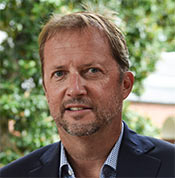 Scott T. Acton (F) is the Lawrence R. Quarles Professor and Chair of Electrical & Computer Engineering at the University of Virginia (UVA). He is also appointed in Biomedical Engineering. Between 2019-2022, he was Program Director and acting Deputy Division Director in the Computer and Information Sciences and Engineering directorate of the U.S. National Science Foundation (NSF). Prof. Acton received the M.S. (1990) and Ph.D. (1993) degrees at the University of Texas at Austin, and he received his B.S. degree at Virginia Tech (1988).
Prof. Acton is a Fellow of the IEEE (2013); Fellow, Artificial Intelligence Industry Alliance (2024); and Fellow, Asia-Pacific Artificial Intelligence Association (2024). At NSF, he was given the Director’s Award for Superior Accomplishment (2020). Prof. Acton was the IEEE/Eta Kappa Nu Outstanding Young Electrical Engineer (1996). At UVA, he has received the All University Teaching Award (2009) and the Educational Innovation Award (2017).
Prof. Acton’s laboratory at UVA is called VIVA - Virginia Image and Video Analysis that specializes in biological/biomedical image analysis problems. He is also co-lead of the NSF-sponsored project called Artificial Intelligence for Advancing Instruction (AIAI), which is joint work with UVA Education and Human Development.
Prof. Acton was Co-Chair, IEEE International Symposium on Biomedical Imaging (2018); General Chair (2006) and Technical Chair (2004), Asilomar Conference on Signals, Systems and Computer; served on the Board of Asilomar (2008-2023); and Editor-in-Chief, IEEE Transactions on Image Processing (2014-2018).
Prof. Acton’s technical interests include multimodal transformers, diffusion networks, graph theory, and diffusion processes for image and video analysis.
Scott Acton
Lawrence R. Quarles Professor of Engineering and Applied Science
University of Virginia, USA
Lecture Topics
- A 40-Minute Short Course on AI
- Don’t Fear AI; Learn It!
- Using Image Analysis to Unravel Mysteries of the Brain
- Artificial Intelligence for Advancing Instruction
Selin Aviyente
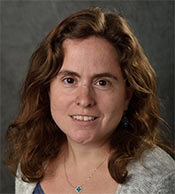 Selin Aviyente (SM) received her B.S. degree with high honors in Electrical and Electronics engineering from Bogazici University, Istanbul in 1997. She received her M.S. and Ph.D. degrees, both in Electrical Engineering: Systems, from the University of Michigan, Ann Arbor, in 1999 and 2002, respectively. She joined the Department of Electrical and Computer Engineering at Michigan State University in 2002, where she is currently a Professor in the Departments of Electrical and Computer Engineering and Biomedical Engineering.
Prof. Aviyente is the recipient of a Withrow Teaching Excellence Award (2005); NSF CAREER Award (2008); and Withrow Excellence in Diversity Award (2021). She has served as Chair, IEEE Signal Processing Society Bioimaging and Signal Processing Technical Committee (2022-2023); Member, Steering Committees of IEEE SPS Data Science Initiative and IEEE BRAIN; Area Editor, Special Issues for IEEE Signal Processing Magazine (2024); Associate Editor, IEEE Open Journal of Signal Processing (2020-2024) and IEEE Transactions on Information Theory. Prof. Aviyente is serving on the organizing committees of multiple IEEE conferences including as the Technical Co-Chair of IEEE International Workshop on Machine Learning for Signal Processing (2025).
Prof. Aviyente’s research focuses on the theory and applications of time-frequency analysis, machine learning, and signal and information processing over networks. Apart from pursuing fundamental research, she has also worked on using existing tools to define and solve new problems, particularly in the area of brain connectomics.
Selin Aviyente
Michigan State University, USA
Lecture Topics
- Computer Audition
- Affective Computing
- Artificial Intelligence in Health
Mathews Jacob
 Mathews Jacob (F) is a professor in the Department of Electrical and Computer Engineering and is heading the Computational Biomedical Imaging Group (CBIG). His research interests include image reconstruction, image analysis, and quantification in the context of magnetic resonance imaging. He obtained his B.Tech in Electronics and Communication Engineering from National Institute of Technology, Calicut, Kerala, and his M.E in signal processing from the Indian Institute of Science, Bangalore. He received his Ph.D. degree from the Biomedical Imaging Group at the Swiss Federal Institute of Technology in 2003. He was a Beckman postdoctoral fellow at the University of Illinois at Urbana Champaign.
Prof. Jacob is currently the Associate Editor of the IEEE Transactions on Medical Imaging and has served as Associate Editor of the IEEE Transactions on Computational Imaging from 2016-20. He was the senior author on two Best Paper Awards (2015 & 2021) and one Best Machine Learning Paper Award (2019) from IEEE ISBI. Dr. Jacob is the recipient of the CAREER Award from the National Science Foundation in 2009, the Research Scholar Award from American Cancer Society in 2011, the Faculty Excellence Award for Research from University of Iowa in 2021, and the Eminent Researcher Award from the Virginia Innovation Partnership Corporation. He served as the General Chair of IEEE International Symposium on Biomedical Imaging, 2020. He was elected as a Fellow of the IEEE (2022) for contributions to computational biomedical imaging.
Mathews Jacob
Department of Electrical and Computer Engineering
University of Virginia, USA
Lecture Topics
- Inexpensive and Faster Medical Imaging Using Learning-Based Algorithms.
- Computational MRI: Past, Present, and Future
Hanseok Ko
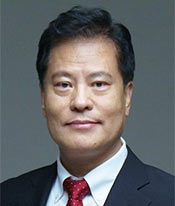 Hanseok Ko (SM) is Professor and Director of Intelligent Signal Processing Lab in the School of Electrical and Computer Engineering at Korea University (KU), Seoul, Korea. He also serves as Director of the Machine Learning Big Data Institute at KU and as co-CTO of a NASDAQ-listed startup he cofounded in 2024. He received his BS degree from Carnegie Mellon University, MS degree from Johns Hopkins University, and Ph.D. degree from the Catholic University of America, all in Electrical Engineering, in 1982, 1988, and 1993, respectively. After spending 12 years at the US Defense Department Labs in Washington DC as principal engineer and later as a faculty at UMBC, he joined the faculty of Korea University as an assistant professor in 1995. He served as Chair of the Electronics Engineering Dept (2002~2004) and Vice President of the Office of Information Technology and Services (2004~2006) at KU. He was a visiting professor at the Johns Hopkins University (2001~2002) and University of Maryland, College Park (2009).
Prof. Ko served as General Chair, IEEE International Conference on Acoustic, Speech, and Signal Processing (ICASSP 2024); General Chair, INTERSPEECH Conference (2022); General Co-Chair, IEEE International Conference on Acoustic, Speech, and Signal Processing (ICASSP 2018); President-elect and President, Acoustical Society of Korea (ASK 2015-2016); Technical Program Chair, IEEE Internation Conference on Multisensor Fusion and Integration (MFI 2017); and General Chair, IEEE Advanced Video and Signal-based Surveillance Conference (AVSS 2014).
Prof. Ko is a Fellow of the International Speech Communication Association (ISCA), and Fellow of the Institute of Engineering and Technology (IET). He served as Guest Editor, Sensors Journal (2019); Associate Editor, Journal of Communication and Networks (JCN; 2007-2010); Associate Editor, E-Bridges Journal (2010~2023); and was presented with IEEE Service Merit Award (2024). He was a recipient of the Emile Bell Award by the Acoustical Society of Korea (2022); and Distinguished Service Award by KICS (Korea Information and Communication Society) (2005). He was also a recipient of the 2008 Samsung Research Excellence Award.
Prof. Ko’s research has been focusing on the challenges and solutions for realizing real-time interactive multimodal human-machine interface, connecting the physical world and human with interactive avatar through signal processing, machine learning, and generative AI. The research interests include multimodal perception (speech, acoustics, image, emotion, gesture), NLP, and avatar-based response generation in terms of dialogue, gesture, facial expression, and text-to-speech (TTS).
Hanseok Ko
Korea University, Korea
Lecture Topics
- Multimodal Human-Machine-Interface: Challenges and Opportunities
- Natural Styling and Few-Shot Adaptation in Text-to-Speech (TTS)
- Information Fusion to Inject Contextual Information Into Large Language Model (LLM)
- Target Speaker Extraction for Multi-Speaker Environment
- Image to Text Generation for Active LLM
2024 Distinguished Lecturers
Justin Dauwels
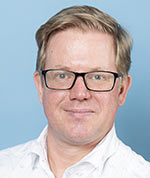 Justin Dauwels (SM) is an Associate Professor at the TU Delft (Circuits and Systems, Department of Microelectronics). He was an Associate Professor of the School of Electrical and Electronic Engineering at the Nanyang Technological University (NTU) in Singapore till the end of 2020. He was the Deputy Director of the ST Engineering – NTU corporate lab. Dr. Dauwels obtained his PhD degree in electrical engineering at the Swiss Polytechnical Institute of Technology (ETH) in Zurich in December 2005.
Dr. Dauwels was a postdoctoral Fellow at the RIKEN Brain Science Institute (2006-2007), a research scientist at the Massachusetts Institute of Technology (2008-2010), a JSPS postdoctoral Fellow (2007), a BAEF Fellow (2008), a Henri-Benedictus Fellow of the King Baudouin Foundation (2008), and a JSPS invited Fellow (2010, 2011).
Dr. Dauwels served as Chairman, IEEE CIS Chapter in Singapore (2018 to 2020); Associate Editor, IEEE Transactions on Signal Processing (2018-2023); Associate Editor, Elsevier journal Signal Processing (since 2021); member, Editorial Advisory Board of the International Journal of Neural Systems (since 2020), and organizer, IEEE conferences and special sessions. He is also Elected Member of the IEEE Signal Processing Theory and Methods Technical Committee and IEEE Biomedical Signal Processing Technical Committee, both since 2018.
Dr. Dauwels’ research on intelligent transportation systems has been featured by the BBC, Straits Times, Lianhe Zaobao, Channel 5, and numerous technology websites. Besides his academic efforts, the team of Dr. Justin Dauwels also collaborates intensely with local start-ups, SMEs, and agencies, in addition to MNCs, in the field of data-driven transportation, logistics, and medical data analytics.
Dr. Dauwels’ research interests are in data analytics with applications to intelligent transportation systems, autonomous systems, and analysis of human behaviour and physiology.
Justin Dauwels
TU Delft, Mekelweg, Delft
E: J.H.G.Dauwels@tudelft.nl
Lecture Topics
- Deep Generative AI
- Machine Learning for Applications in Neurology
- Machine Learning for Applications in Psychiatry
- Perception Error Modelling for Autonomous Driving
Urbashi Mitra
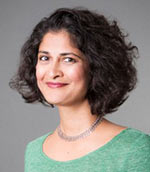 Urbashi Mitra (F) received the B.S. and the M.S. degrees from the University of California at Berkeley in 1987 and 1989, respectively, and her Ph.D. from Princeton University in 1994. Dr. Mitra is currently the Gordon S. Marshall Professor in Engineering at the University of Southern California with appointments in Electrical & Computer Engineering and Computer Science.
Dr. Mitra was the inaugural Editor-in-Chief, IEEE Transactions on Molecular, Biological and Multi-scale Communications; member, IEEE Information Theory Society's Board of Governors (2002-2007, 2012-2017), the IEEE Signal Processing Society’s Technical Committee on Signal Processing for Communications and Networks (2012-2016), the IEEE Signal Processing Society’s Awards Board (2017-2018), and the Chair/Vice-Chair of the IEEE Communication Theory Technical Committee (2017-2020). Dr. Mitra has also served on the IEEE Signal Processing Society’s Awards Board (1/17–12/18) and Fellows Committee (1/17–12/19) and was the Society’s representative on the IEEE Transactions on Wireless Communications Steering Committee (1/14–12/16, 1/17–12/18, Chair).
Dr. Mitra has further served on the IEEE Founders Medal Committee (2020–2022), Chair (2023), the IEEE Koji Kobayashi Computers and Communications Award Committee (2019–2022). the IEEE James H. Mulligan Jr. Education Medal Committee (2013-2016, Chair 2017- 2018) and the inaugural IEEE Fourier Award for Signal Processing Committee (2013-2016).
Dr. Mitra is a Fellow of the IEEE, recipient of: the USC Viterbi School of Engineering Senior Research Award (2021), the IEEE Women in Communications Engineering Technical Achievement Award (2017), a UK Royal Academy of Engineering Distinguished Visiting Professorship (2015), a US Fulbright Scholar Award (2015), a UK Leverhulme Trust Visiting Professorship (2015-2016), IEEE Communications Society Distinguished Lecturer, Globecom Signal Processing for Communications Symposium Best Paper Award (2012), US National Academy of Engineering Lillian Gilbreth Lectureship (2012), the International Conference on Distributed Computing in Smart Systems Applications & Systems Best Paper Award (2009), Okawa Foundation Award (2001), Ohio State University’s College of Engineering Lumley Award for Research (2000), and a National Science Foundation CAREER Award (1996).
Dr. Mitra’s research interests are in wireless communications, structured statistical methods, communication and sensor networks, biological communication systems, detection and estimation and the interface of communication, sensing and control.
Urbashi Mitra
Ming Hsieh Department of Electrical & Computer Engineering
University of Southern California, USA
E: ubli@usc.edu
Lecture Topics
- Exploiting Statistical Hardness for Increased Privacy in Wireless Systems
- Digital Cousins: Ensemble Learning for Large Scale Wireless Networks
- Microbiology Inspired Molecular Communications: Transceiver Design and Scheduling
- Resource Allocation and Learning for Wireless Networks: Underwater and Radio Frequency Use Cases
Björn W. Schuller
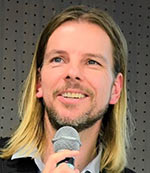 Björn W. Schuller (F) received his diploma in 1999, his doctoral degree for his study on Automatic Speech and Emotion Recognition in 2006, and his habilitation (fakultas docendi) and was entitled Adjunct Teaching Professor (venia legendi) in the subject area of Signal Processing and Machine Intelligence for his work on Intelligent Audio Analysis in 2012 all in electrical engineering and information technology from TUM in Munich/Germany.
From 2023, he is Full Professor of Health Informatics at TUM in Munich/Germany. Since 2017, he is Full Professor and Chair of Embedded Intelligence for Health Care and Wellbeing at the University of Augsburg/Germany. At the same time, he is Professor of Artificial Intelligence in the Department of Computing at Imperial College London/UK since 2018 where he heads the Group on Language Audio & Music (GLAM), previously being a Reader in Machine Learning since 2015 and Senior Lecturer since 2013. Further, he is the co-founding CEO and current CSO of audEERING GmbH – a TUM start-up on intelligent audio engineering since its launch in 2012. Dr. Schuller was also a member of the Alan Turing Institute and Royal Statistical Society Lab (Turing-RSS Lab) (2021-2022), Guest Professor, Southeast University in Nanjing, China (2021-2022), appointed as Honourary Dean of the Centre for Affective Intelligence at Tianjin Normal University, Tianjin, P.R. China (2019), Full Professor and Chair of Complex and Intelligent Systems at the University of Passau/Germany (2014-2017) where he previously headed the Chair of Sensor Systems in 2013.
Dr. Schuller is Fellow of the IEEE (2018); Fellow, International Speech Communication Association (ISCA, 2020); Fellow, British Computer Society (BCS, 2020); Fellow, Association for the Advancement of Affective Computing (AAAC, 2021); Fellow, European Laboratory for Learning and Intelligent Systems (ELLIS, 2021); Senior Member, ACM (2018). Before, he was President, Association for the Advancement of Affective Computing (AAAC, registered Charity in the UK, 2013-2015); elected member, IEEE Speech and Language Processing Technical Committee (2013-2018), and Honorary Fellow and member, TUM Institute for Advanced Study (IAS, 2013-2014).
Dr. Schuller was co-founding member and secretary of the steering committee (2009-2013) and Guest Editor, and served as Associate Editor and Editor in Chief of the IEEE Transactions on Affective Computing (2015-2018), General Chair, of AAAC/IEEE ACII 2019 and ACM ICMI 2014, and workshop and challenge organizer including the first of their kind INTERSPEECH 2009-2021 annual Computational Paralinguistics Challenges and the 2011-2019 annual Audio/Visual Emotion Challenge and Workshop and a Program Chair of INTERSPEECH 2019, ACM ICMI 2019 and 2013, IEEE SocialCom 2012, and ACII 2011 and 2015, Area Chair of the ACM Multimedia, IEEE ICASSP, IEEE ICTAI, IJCAI, EURASIP EUSIPCO.
Björn W. Schuller
University of Augsburg
Augsburg, Germanym
E: schuller@ieee.org
Website
Imperial College London
London, UK
Lecture Topics
- Computer Audition
- Affective Computing
- Artificial Intelligence in Health
Tuomas Virtanen
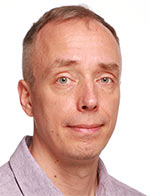 Tuomas Virtanen (F) is Professor at Tampere University, Finland, where he is leading the Audio Research Group. He received the M.Sc. and Doctor of Science degrees in information technology from Tampere University of Technology in 2001 and 2006, respectively. He has also been working as a research associate at Cambridge University Engineering Department, UK (2007).
Prof. Virtanen is an IEEE Fellow (2021), member, Audio and Acoustic Signal Processing Technical Committee of IEEE Signal Processing Society (2016-2022); associate editor, IEEE/ACM Transactions on Audio, Speech, and Language Processing (2016-2019); General Chair, DCASE (Detection and Classification of Acoustic Scenes and Events) workshop in 2016, 2017, and 2023; Area Chair, multiple ICASSP and WASPAA conferences; Awards Chair, WASPAA 2023; and Chair, DCASE Steering Group between (2016-2023). Prof. Virtanen has received the IEEE Signal Processing Society Best Paper Award (2012) as well as several other awards, including best paper awards of IWAENC 2018, AES 2018, IJCNN 2017, CHiME 2013, and ISMIR 2009 conferences.
Prof. Virtanen’s research interests include computational acoustic scene analysis, audio signal processing, source separation, and machine learning for audio.
Tuomas Virtanen
Tampere University
Finland
E: tuomas.virtanen@tuni.fi
Lecture Topics
- Computational Acoustic Scene Analysis: Machine Learning Tasks, Models, Data, and Applications
- Data Acquisition for Training and Evaluation of Computational Acoustic Scene Analysis Methods
- Sound Event Localization and Detection
- Detection and Classification of Acoustic Scenes and Events: An Overview of the DCASE Data Challenge
- Machine Learning for Acoustic Scene Analysis
Yimin D. Zhang
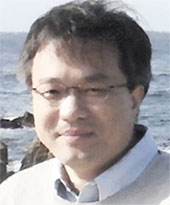 Yimin D. Zhang (F) graduated from the Northwest Telecommunications Engineering Institute (now Xidian University), Xi'an, China, in 1982, and received the Ph.D. degree in Applied Physics from the University of Tsukuba, Tsukuba, Japan, in 1988. He is an Associate Professor at the Department of Electrical and Computer Engineering, Temple University, Philadelphia, PA. Before he joined Temple, he was a Research Professor at the Center for Advanced Communications at Villanova University, Villanova, PA.
Dr. Zhang is a Fellow of IEEE (2019); Fellow, SPIE (2020); member, Signal Processing Theory and Methods (SPTM) Technical Committee (2019-2024); member, Integrated Sensing and Communication (ISAC) Technical Working Group (since 2021); founding member, Integrated Sensing and Communication (ISAC) Emerging Technology Initiative of the IEEE Communications Society (since 2021); member, Sensor Array and Multichannel (SAM) Technical Committee (2015-2020); Senior Area Editor, IEEE Transactions on Signal Processing (since 2022); and an editor, IEEE Signal Processing journal (since 2008). He has served as Associate Editor, IEEE Transactions on Signal Processing (2010-2014, 2015-2019), IEEE Transactions on Aerospace and Electronic Systems (2020-2022), IEEE Signal Processing Letters (2006-2010), and Journal of the Franklin Institute (2007-2013). Dr. Zhang was Technical Co-Chair, IEEE Benjamin Franklin Symposium on Microwave and Antenna Sub-Systems (BenMAS) (2014); Technical Co-Chair, IEEE Sensor Array and Multichannel Signal Processing (SAM) Workshop (2018); Technical Area Chair, Asilomar Conference on Signals, Systems, and Computers (2019); and Track Co-Chair, IEEE Radar Conference (2020).
Dr. Zhang is a recipient of the 2016 IET Radar, Sonar and Navigation Premium Award, the 2017 IEEE Aerospace and Electronic Systems Society Mimno Award, the 2019 IET Communications Premium Award, and the 2021 EURASIP Best Paper Award for Signal Processing.
Dr. Zhang's research interests lie in the areas of statistical signal and array processing, information theory, compressive sensing, machine learning, computational imaging, time-frequency analysis, and optimization applied to radar, wireless communications, satellite navigation, and radio astronomy.
Yimin D. Zhang
Temple University
Philadelphia, PA, USA
E: ydzhang@temple.edu
Lecture Topics
- Sparse Array Design and Processing for Direction-of-Arrival Estimation
- Spectrum Sharing for Joint Sensing and Communications
- Information Theoretic Compressive Sensing in Massive MIMO Systems
- Time-Frequency Analyses and Array Processing