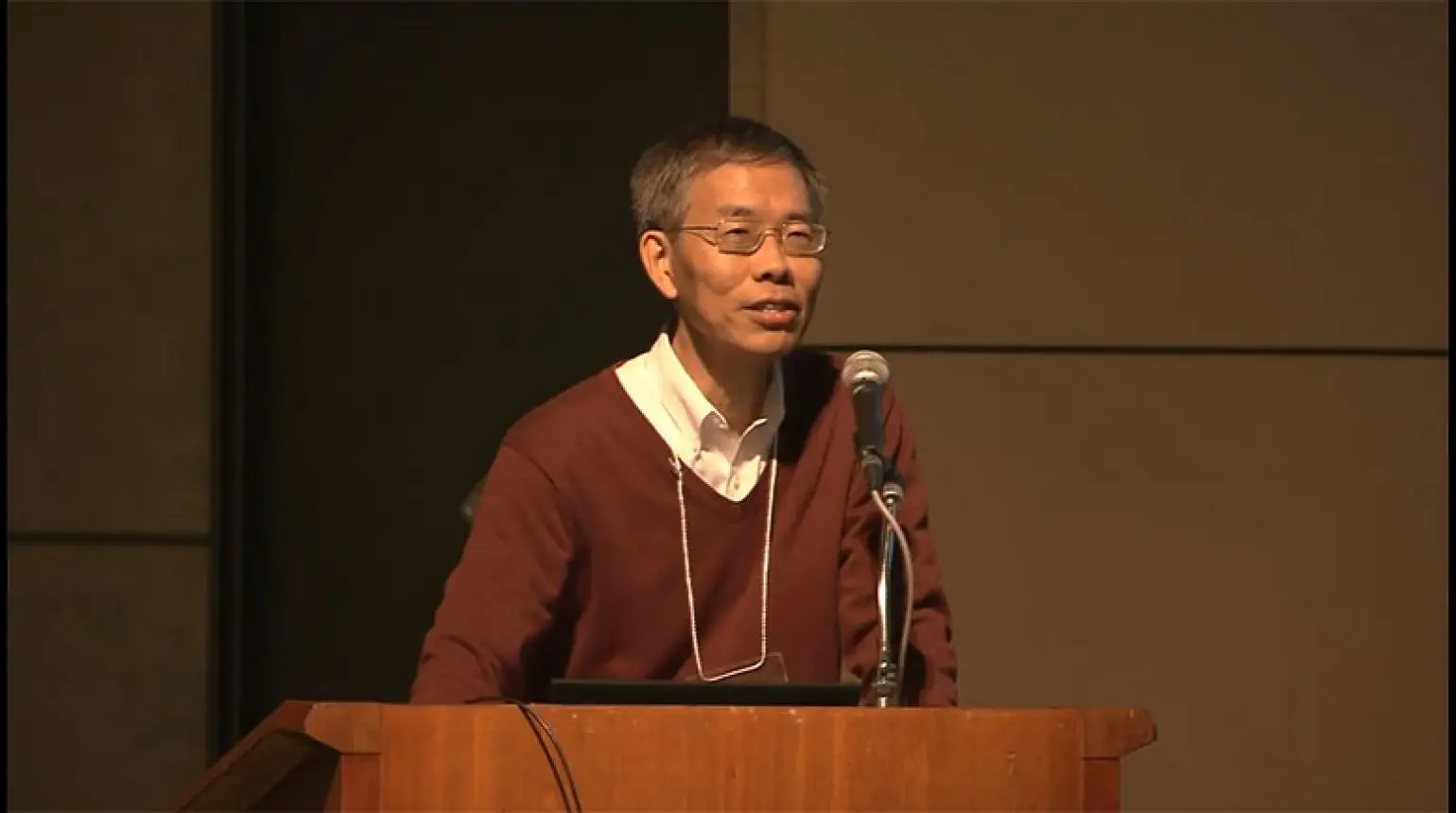
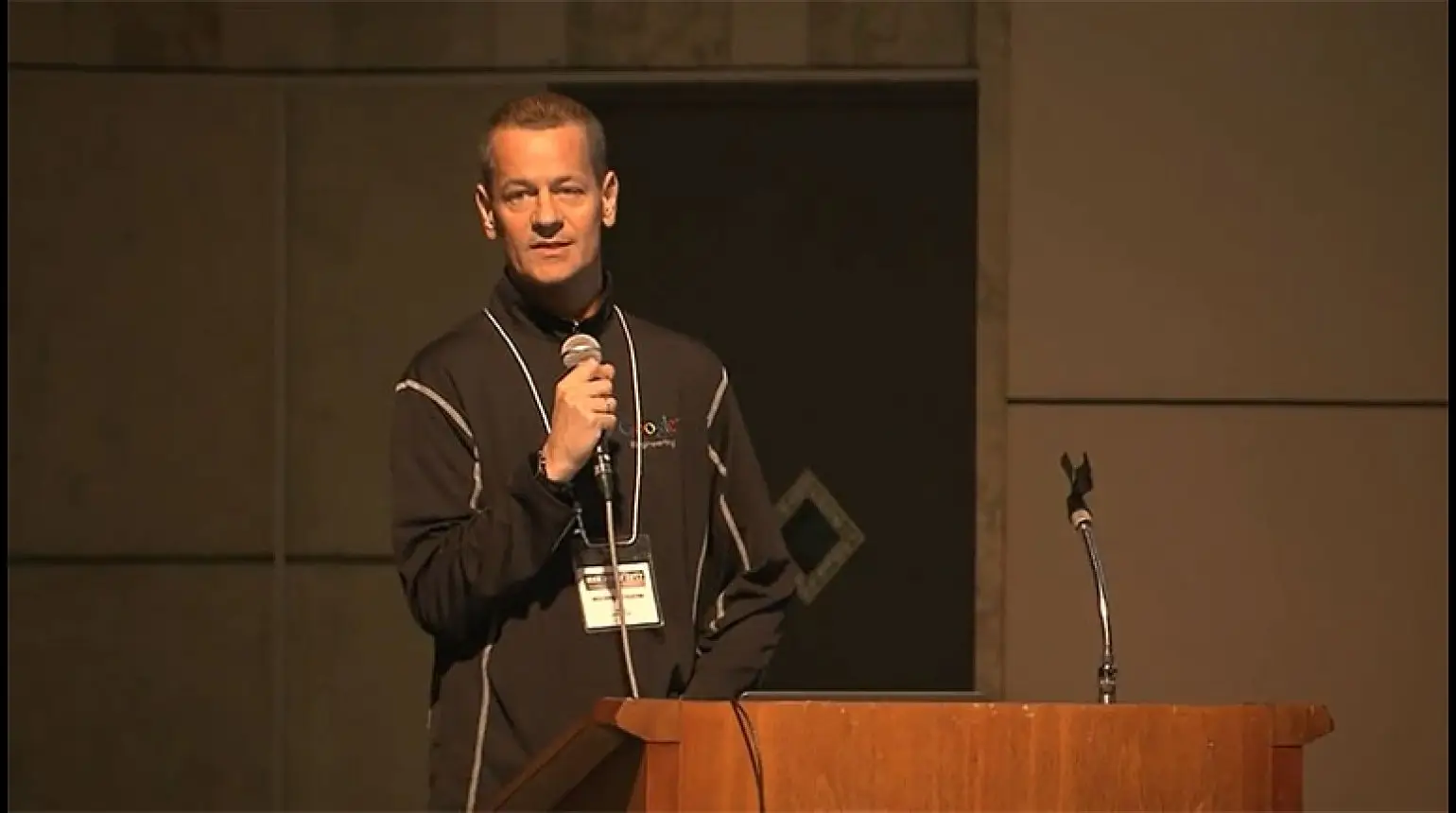
Moving to Neural Machine Translation at Google
SHARE:
Category
Proficiency
Language
Media Type
Intended Audience
Pricing

SPS Members $0.00
IEEE Members $11.00
Non-members $15.00

Authors
Date
Machine learning and in particular neural networks have made great advances in the last few years for products that are used by millions of people, most notably in speech recognition, image recognition and most recently in neural machine translation. Neural Machine Translation (NMT) is an end-to-end learning approach for automated translation, with the potential to overcome many of the weaknesses of conventional phrase-based translation systems. Unfortunately, NMT systems are known to be computationally expensive both in training and in translation inference. Also, most NMT systems have difficulty with rare words. These issues have hindered NMT's use in practical deployments and services, where both accuracy and speed are essential. In this work, we present GNMT, Google's Neural Machine Translation system, which addresses many of these issues. The model consists of a deep LSTM network with 8 encoder and 8 decoder layers using attention and residual connections. To accelerate final translation speed, we employ low-precision arithmetic during inference computations. To improve handling of rare words, we divide words into a limited set of common sub-word units for both input and output. On the WMT'14 English-to-French and English-to-German benchmarks, GNMT achieves competitive results to state-of-the-art. Using human side-by-side evaluations it reduces translation errors by more than 60% compared to Google's phrase-based production system. The new Google Translate was launched in late 2016 and has improved translation quality significantly for all Google users.
Duration
1:10:54
Subtitles

Crossing Speaker and Language Barriers in Speech Processing

SHARE:
Category
Proficiency
Language
Media Type
Intended Audience
Pricing

SPS Members $0.00
IEEE Members $11.00
Non-members $15.00

Authors
Date
A person’s speech is strongly conditioned by his own articulators and the language(s) he speaks, hence rendering speech in an inter-speaker or inter-language manner from a source speaker’s speech data collected in his native language is both academically challenging and technology/application desirable. The quality of the rendered speech is assessed in three dimensions: naturalness, intelligibility and similarity to the source speaker. Usually, the three criteria cannot be all met when rendering is done in both cross-speaker and cross-language ways. We will analyze the key factors of rendering quality in both acoustic and phonetic domains objectively. Monolingual speech databases but recorded by different speakers or bilingual ones recorded by the same speaker(s) are used. Measures in the acoustic space and phonetic space are adopted to quantify naturalness, intelligibility and speaker’s timber objectively. Our “trajectory tiling” algorithm-based, cross-lingual TTS is used as the baseline system for comparison. To equalize speaker difference automatically, DNN-based ASR acoustic model trained speaker independently is used. Kullback-Leibler Divergence is proposed to statistically measure the phonetic similarity between any two given speech segments, which are from different speakers or languages, in order to select good rendering candidates. Demos of voice conversion, speaker adaptive TTS, cross-lingual TTS will be shown either inter-speaker or inter-language wise, or both. The implications of this research on low-resourced speech research, speaker adaptation, “average speaker’s voice”, accented/dialectical speech processing, speech-to-speech translation, audio-visual TTS, etc. will be discussed.
Duration
1:01:08
Subtitles

SPE-ANLS