What Should We Learn? Deep Learning for Visual Understanding: Part 2
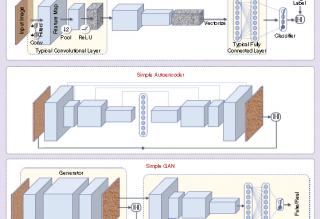
The November 2017 special issue of SPM on deep learning for visual understanding surveyed deep-learning solutions under reinforcement; weakly supervised and multimodal settings, investigated their robustness; and presented overviews of their applications in domain adaptation, hashing, semantic segmentation, metric learning, inverse problems in imaging, image-to-text generation, and picture-quality assessment.
Call for Papers: IEEE Transactions on Multimedia Special Issue on Trustworthiness in Social Multimedia Analytics and Delivery: Models, Technologies, Privacy, and Applications

With the rapid development of multimedia technologies and the popularization of social networks, social multimedia content is being delivered to more and more users with a high quality of experience (QoE). However, as a huge amount of social users have ever-increasing demands to share and exchange multimedia content with each other, the current social multimedia analytics and delivery need to deal with various attacks perpetrated by malicious users or through spam content.
Special Issue of JSTSP on End-to-End Speech and Language Processing

Speech and Language processing (SLP) is essentially a series of sequence-to-sequence learning problems. Conventional SLP systems map input to output sequences through module-based architectures where each module is independently trained.
What Should We Learn? Should We Upgrade our Brains?

Neurotechnology is one of the hottest areas of engineering, and the technological achievements sound miraculous: Paralyzed people have controlled robotic limbs with their brains, while blind people are receiving implants that send signals to their visual centers.
Special Issue on Safety and Security in Cyber-Physical Systems of Proceedings of the IEEE

Engineering safety and computer security have traditionally been viewed as separate fields: safety concentrates on the avoidance of physical harm; security protects information and privacy. When computers and physical plants did not interoperate, separation of safety and security was both reasonable and prudent. Given the advent of CPSs, we can no longer consider these problems as separate.
IEEE Transactions on Multimedia - Special Issue on "Multimedia Big Data for Extreme Events"

Recently, leveraging technological advances and using Big Data approaches for information management and processing in extreme events (e.g., Natural Disasters, Extreme Weather, Emergency Events, Diseases and etc.) have attracted much research attention. Multimedia is increasingly becoming the most important and valuable source for insights and information in extreme events.
Special Issue on Cyber Security in Aerospace Systems from IEEE AES Magazine
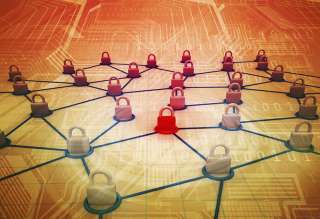
Cyber security is an increasing worry on many fronts, but typical discussions and headlines focus on very different types of threats than those experienced by aviation and space systems. Cyber security vulnerabilities compromise the control, traffic, navigation, and integrity of these systems. Countermeasures involve not only specialized systems and architectures, but often international cooperation, as the need for awareness extends well beyond the boundaries of a single aircraft.
What Should We Learn from Efficient Processing of Deep Neural Networks

Neural networks are a set of biologically inspired algorithms that can be used to recognize patterns. Deep neural networks (DNNs) are neural networks that have much more layers in depth than traditional neural networks.
What Should We Learn from Deep Learning for Visual Understanding

In the past decade, there has been a transformative and permanent revolution in computer vision cultivated by the reinvigorated adoption of deep learning for visual understanding tasks.
New Editors-in-Chief for 2018
The IEEE Signal Processing Society has appointed five new Editors-in-Chief who will start their terms on 1 January 2018. The details are as follows...
IEEE Signal Processing Society on 

@ieeeSPS
13.5K+ subscribers‧250+ videos