In an age when signal processing lies at the core of so many different technologies, nothing is more important than its contribution to health care. From improved cardiac patient support to enhanced magnetic resonance imaging (MRI) and advanced diagnostics, signal processing is helping physicians work more safely, efficiently, and accurately. Here is a look at three important research projects that are using signal processing to assist both patients and health-care providers.
The November 2021 IEEE Technical Activities Board meeting presentations articulated several warning signs and promising calls to action. A new, radical proposal to change the way IEEE elevates its Members to Fellow status may finally address the inclusion and equity issues that we discuss but have yet to address. The proposal is still in its infancy and was drafted by a committee chaired by our very own Jose Moura. It recognizes and documents what many of us have known anecdotally: the success rate of Fellow nominations coming from industry, government, and regions outside North America and Europe is abysmally low, despite the quality of the nominees.
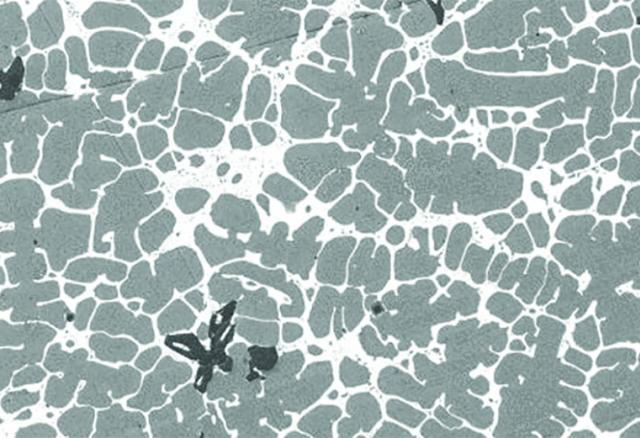
The Markov random field (MRF) is one of the most widely used models in image processing, constituting a prior model for addressing problems such as image segmentation, object detection, and reconstruction. What is not often appreciated is that the MRF owes its origin to the physics of solids, making it an ideal prior model for processing microscopic observations of materials. While both fields know of their respective interpretations of the MRF, each knows very little about the other’s version of it. Hence, both fields have “blind spots,” where some concepts readily appreciated by one field are completely obscured from the other.
I am excited to start my service as the IEEE Signal Processing Society (SPS) president. I should note that I am the first SPS president directly elected by the SPS membership, due to the SPS Board of Governors (BOG) urging a stronger member voice in elections. This is a big honor for me and I would like to express my thanks to SPS members for their trust. I write this article to introduce myself, acknowledge key volunteers and staff for their service, outline the activities I will lead over the next two years, and invite your comments and suggestions.