JSTSP Special Issue on Information-Theoretic Methods in Data Acquisition, Analysis, and Processing

The field of information theory - dating back to the seminal work by Claude E. Shannon in 1948 - is considered to be one of the landmark intellectual achievements of the 20th century, underpinning advances in compression and communication of data that underpins the information age. In particular, information-theoretic methods have been used to illuminate fundamental limits and gauge the effectiveness of algorithms for various problems in statistical decision theory, data communications, data compression, security, and networking.
Signal Processing Opens the Internet of Things to a New World of Possibilities
The Internet of Things (IoT ) refers to the wireless connection of ordinary objects, such as vehicles, cash machines, door locks, cameras, industrial controls, and municipal traffic systems, to the Internet.
State of the Art and Future Directions on DSP and Circuit Architectures for MIMO

Massive MIMO is a compelling wireless access concept that relies on the use of an excess number of base-station antennas, relative to the number of active terminals. This technology is a main component of 5G New Radio and addresses all important requirements of future wireless standards: a great capacity increase, the support of many simultaneous users, and improvement in energy efficiency.
What Should We Learn? Rethinking PCA for Modern Data Sets
In today’s big and messy data age, there is a lot of data generated everywhere around us. Examples include texts, tweets, network traffic, changing Facebook connections, or video surveillance feeds coming in from one or multiple cameras. Dimension reduction and noise/outlier removal are usually important preprocessing steps before any high-dimensional (big) data set can be used for inference.
What Should We Learn? Reinventing the wing With electric propulsion……

Five years ago, engineers at NASA started to think about using a large number of electric motors to create a blown wing, later naming the project LEAPTech, for Leading Edge Asynchronous Propeller Technology. The novel configuration was based on an old concept: The idea—known as a “blown wing”—was to propel air at high speed over the wing using many motors and propellers mounted along the leading edge.
What Should We Learn? Making Medical AI Trustworthy
The health care industry may seem the ideal place to deploy artificial intelligence systems. Each medical test, doctor’s visit, and procedure is documented, and patient records are increasingly stored in electronic formats. AI systems could digest that data and draw conclusions about how to provide better and more cost-effective care. Plenty of researchers are building such systems:
What Should We Learn? Special Issue on Signal and Information Processing for Critical Infrastructures
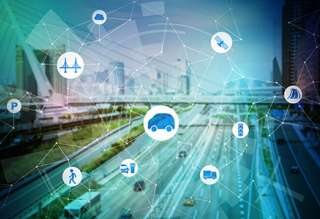
Critical infrastructures such as the smart electric power grid, gas and water utility networks, transportation networks, and communication networks are crucially supporting quality of life and economic growth. Future critical infrastructures are envisioned to integrate sensory data acquisition, communication and computation technologies, and signal processing to offer improved services to their end-users.
Foundations and Trends in Localization Technologies - Part II
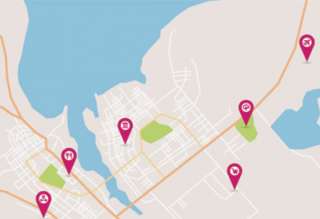
The problem of pervasive indoor localization still remains largely unsolved due to the difficult propagation conditions. Some IoT applications will require real-time localization with submeter accuracy in GNSS-challenged environments.
What Should We Learn? Special Issue on Data Mining for Cybersecurity
Computer and communication systems are subject to repeated security attacks. Given the variety of new vulnerabilities discovered every day, the introduction of new attack schemes, and the ever-expanding use of the Internet, it is not surprising that the field of computer and network security has grown and evolved significantly in recent years.
What Should We Learn? Special Issue on Biometrics and Forensics

Biometrics and multimedia forensics technologies are rapidly becoming an integral part of forensics sciences. This is evident by the increasing number of security applications such as computer and physical access control, digital rights management, homeland security, surveillance, and defence.
IEEE Signal Processing Society on 

@ieeeSPS
13.5K+ subscribers‧250+ videos