Toward Practical ELAA Systems: A Distributed Signal Processing Perspective

Contributed by Yanqing Xu and co-authors, based on the IEEEXplore® article, “Distributed Signal Processing for Extremely Large-Scale Antenna Array…
Read moreThe SPS blog aims to raise awareness about signal processing and Society-related topics to a general interest audience in an engaging, informal, and non-technical way. If you're interested in contributing to the SPS blog, please contact the SPS Blog Team at sps-blog@ieee.org for more information.
Contributed by Yanqing Xu and co-authors, based on the IEEEXplore® article, “Distributed Signal Processing for Extremely Large-Scale Antenna Array…
Read more
This blog presents a single-shot multifrequency ToF imaging system that effectively handles multipath interference and delivers reliable depth sensing in complex scenes. The proposed joint hardware–software design captures multiple Fourier coefficients of the scene response function in one exposure and leverages robust algorithms to solve the inverse problem through parametric closed-form depth reconstruction.

Copenhagen has been selected to host the 2029 IEEE International Conference on Acoustics, Speech, and Signal Processing (ICASSP).

Steganography, the practice of concealing information within digital media, is crucial for information security and forensics. Steganographic security, defined as the ability to evade detection by steganalyzers, is a key metric in modern steganography.

Underwater images are highly susceptible to quality degradation due to light's scattering and absorption [1,2]. Unfortunately, underwater images with deteriorating quality impose many limitations in following visual perception analysis and practical underwater applications.
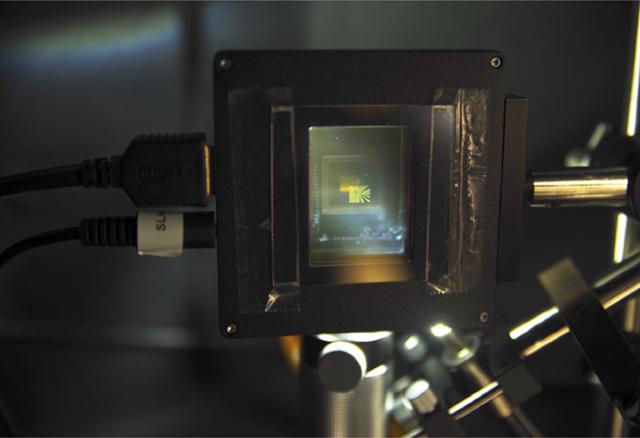
This post introduces a novel approach to extending the depth of field (DOF) in lensless cameras using optimized radial coded masks. Our proposed method overcomes the limitations of previous and generic coded mask designs by employing a radial-shape-constrained optimization procedure, resulting in improved optical transfer functions while enabling extended DOF. Through simulations and prototype experiments, we demonstrate that our optimized radial mask achieves superior imaging quality compared to hand-crafted radial patterns and larger DOF than non-radial masks.

The new global thought leadership event brought together industry movers and shakers to discuss the future of Buildings and Factories in the Built Environment.

An occlusion-aware model for gait video processing uses SMPL-based human mesh models and machine learning to achieve superior recognition in challenging surveillance videos.

We propose a novel low-level feature similarity (FSIM) induced FR IQA metric, namely, FSIM. FSIM can measure image quality automatically and consistently with human perception.

Electromagnetic inverse scattering problems (ISPs) are crucial in noninvasive imaging but challenging due to nonlinearity and computational costs. This blog explores machine learning-based ISP solvers with physics-guided loss functions, emphasizing the role of near-field priors and multiple-scattering effects. Numerical experiments highlight the advantages and limitations of these approaches.

@ieeeSPS
11.3K subscribers‧180 videos